Gene Therapy in Abu Dhabi Frees Father from Lifelong Thalassaemia Dependence
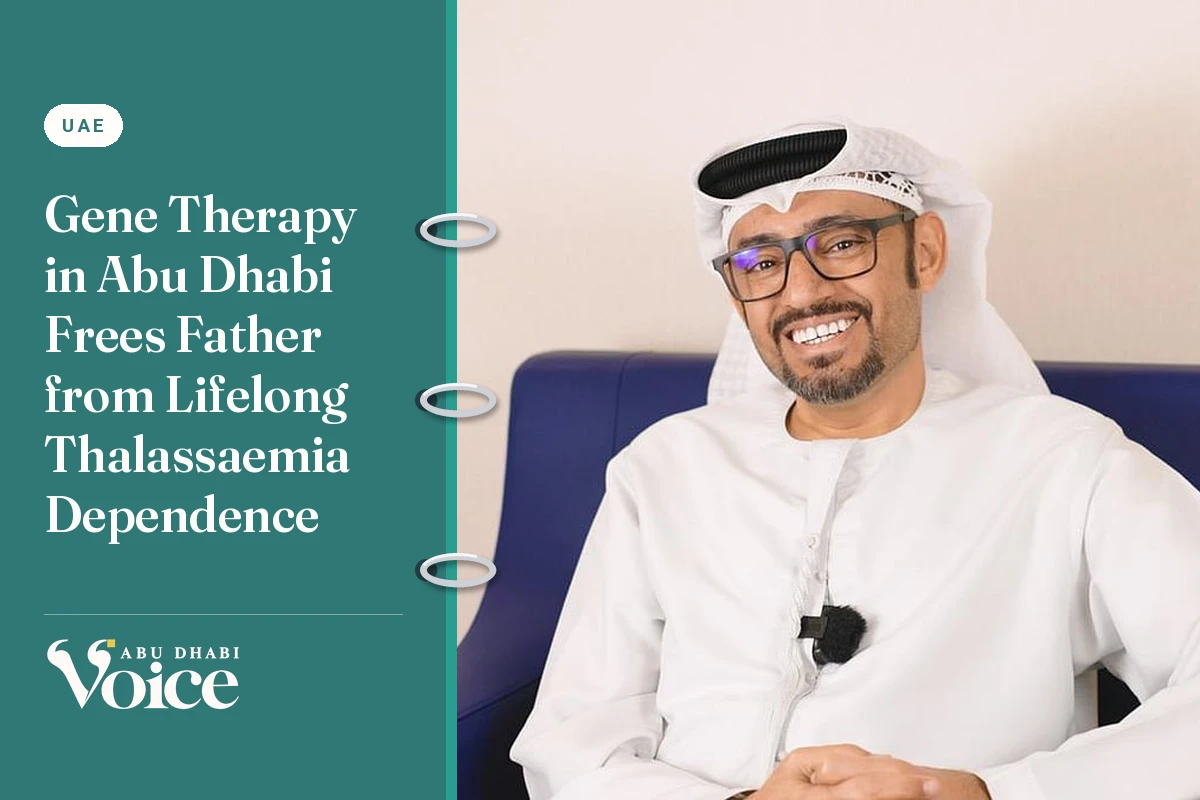
A 43-year-old father named Fahad no longer schedules his life around hospital visits and blood transfusions, after becoming one of the first patients to receive gene therapy for thalassaemia in Abu Dhabi. Speaking at the Abu Dhabi Future Health Summit 2026, he described how the inherited blood disorder had shaped his life since childhood. “My existence revolved around transfusions, medications and clinic appointments,” he said. He had always tried to maintain a positive outlook and proper care as the only way to manage the condition.
A Life Measured in Weeks
For as long as he could remember, Fahad required a blood transfusion every three weeks. His energy would steadily drop as the next transfusion date approached, followed by medications, checkups and what he called “time toxicity”. Adapting to the daily demands of his health was inconvenient at first, but he learned to manage, and his family adjusted alongside him. He continued his education, built a career and raised a family despite the challenges. Yet there were moments of frustration and exhaustion, especially when others made unintentionally hurtful remarks because they did not understand his reality. “I learned that life may come with limitations, but those limitations do not have to define my ambitions,” he said.
From Idea to Treatment
Fahad credited the Emirates Thalassaemia Society for helping patients learn about new treatments and connecting them with specialists. At one of the society’s conferences, he met the medical team from Yas Clinic and the Abu Dhabi Stem Cells Centre (ADSCC), which turned gene therapy from a far‑off idea into a possible path forward. He also acknowledged the Dubai Thalassaemia Centre for keeping patients updated on care improvements. After comprehensive evaluations, extensive testing and multidisciplinary assessments, he was identified as a suitable candidate for gene therapy. The treatment involved collecting his own stem cells, genetically modifying them, and reinfusing them after preparatory therapy.
Dr Loubna Abdel Hadi, Senior Research Scientist at Yas Clinic and ADSCC, explained the process for patients undergoing Chimeric Antigen Receptor T‑cell (CAR‑T) therapy at the centre. “Before infusion, we perform quality tests to confirm the modification has worked. Using the patient’s own T cells allows us to create a personalised treatment,” she said. She added that for many CAR‑T therapies, the entire cycle from collection to infusion takes about twelve days because the cells are modified, expanded, tested and prepared in a local manufacturing facility.
Fahad said the medical team approached his case with professionalism and honesty. “Their straightforward approach, without giving false promises, helped me make an informed decision with confidence and realistic expectations,” he recalled.
Freedom from Transfusions
After more than four decades of living with thalassaemia, the result he had hoped for arrived. The news that his body could produce healthy levels of haemoglobin on its own brought overwhelming relief and gratitude. “Knowing that my body could finally produce healthy levels of haemoglobin on its own was an extraordinary feeling,” he said. He no longer needs to organise his days around transfusion dates or cope with the constant demands of managing the disorder. Improved energy has allowed him to devote more attention to his health, family and personal interests. Medical follow‑ups continue, but the future feels hopeful and free from the sympathy, misunderstanding and labelling that often accompany a chronic illness.
Dr Abdel Hadi noted that thirty patients have been treated at the centre so far. “Our achievement is not only about the number of patients treated, but also about building local expertise, strengthening healthcare infrastructure, and making innovative treatments more accessible to patients across the region,” she said.
Dr Maysoon Al Karam, Chief Medical Officer at Yas Clinic, added that the success of the case marks an important milestone in expanding access to innovative treatment options and reinforces Abu Dhabi’s position as a regional centre for advanced healthcare and medical innovation.
Fahad paid tribute to the pillars of support who stood by him through the treatment: his wife, who walked every challenge with him; his children, who gave him a vision of a healthier future; and his mother, who has supported him since his earliest days with thalassaemia. “My father’s presence and support meant a great deal to me,” he added. His children once watched their father build his life around an illness. Now, they can watch him build a life beyond it.