How Sweden cut smoking to 3.7%: Lessons for the UAE discussed in Dubai
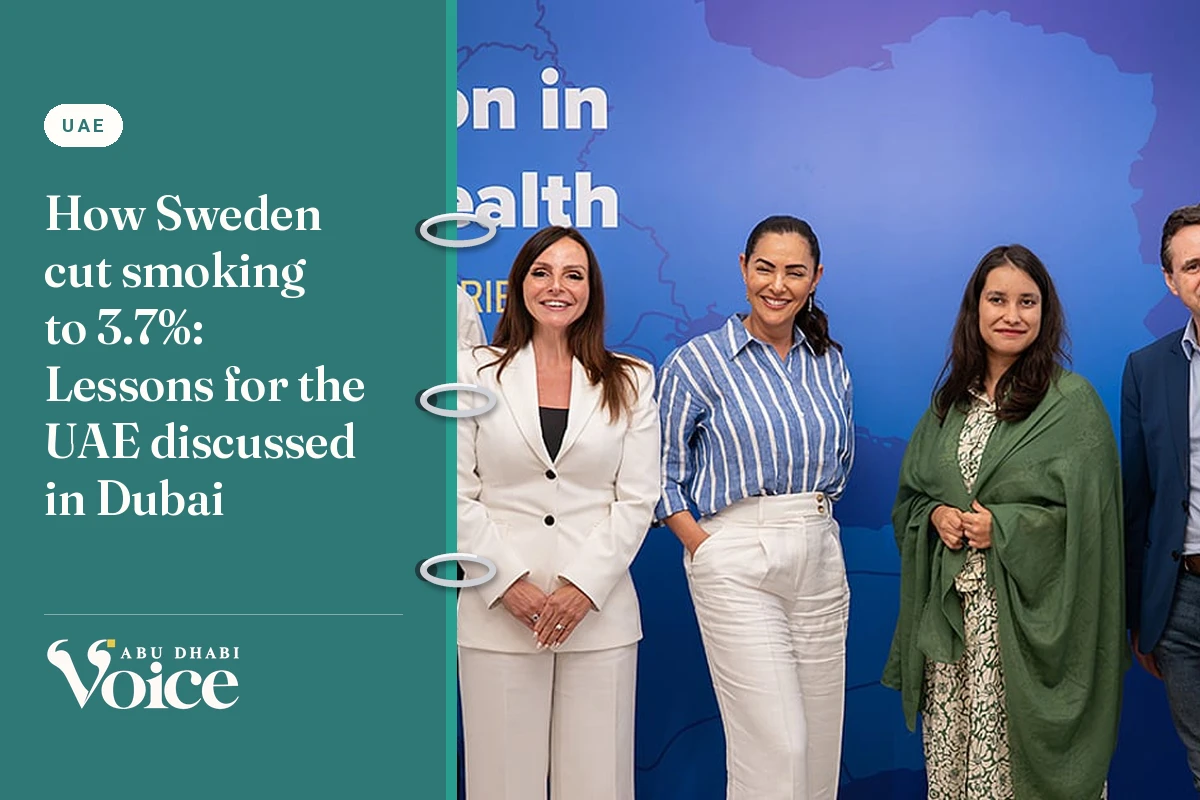
Sweden has achieved a daily smoking rate of just 3.7%, making it the only smoke-free nation in Europe and reaching that milestone 16 years ahead of the European Union’s 2040 target. This remarkable public health success was the centrepiece of an event titled ‘Innovation in Public Health: The Swedish Experience’, hosted by the independent initiative Quit Like Sweden (QLS) at the Hilton Dubai Palm Jumeirah on 12 October.
Sweden’s Smoke-Free Success
QLS, founded by Suely Castro, studies the strategies behind Sweden’s achievement. The country adopted the World Health Organization’s tobacco control measures while also accepting that smoke-free alternatives can assist adults in quitting. Sweden did not choose between tobacco control and harm reduction; it employed both approaches simultaneously.
A key element of this strategy is what QLS calls the three As: alternatives must be accessible (easy to find and purchase), acceptable (matching people’s tastes, habits and needs) and affordable (cheaper than cigarettes). Without all three conditions, cigarettes remain the more convenient option.
The United Arab Emirates has regulated e-cigarettes for adult use since 2019 and nicotine pouches since 2025. Nearly 90% of UAE residents are expatriates, many of whom bring smoking habits from their home countries, including smokeless nasvay and betel quid. In Sweden, European migrants smoke at a rate of 7.8%, compared with 24% in their countries of origin, illustrating the impact of environment and choice.
Medical Perspectives on Smoking Cessation
Dr Rachel Kaminski of Saudi German Hospital in Dubai described the gaps in cessation support that her patients experience. ‘Every week I see people whose lungs are showing the damage from smoking much earlier in life than they should,’ she said. ‘Many of them want to stop and have tried more than once. What they lack is proper support: dedicated cessation services, treatment covered by insurance, and something realistic to offer those who cannot quit. Without that, we are treating the consequences, not the cause.’
Consultant Pulmonologist Dr Mohammad Fawzi Katranji noted that misconceptions about nicotine among both the public and health professionals make smoking harder to address. Many people believe shisha and midwakh are cleaner than cigarettes, but all three involve burning tobacco. Dokha can deliver up to five times the nicotine of a cigarette and about 55% more tar, while a single shisha session can equal more than 40 cigarettes.
Addressing Misconceptions About Nicotine and Vaping
Public health professionals at the event raised questions about EVALI and popcorn lung. The 2019 US EVALI outbreak was caused by illicit cannabis (THC) products contaminated with vitamin E acetate, not by regulated nicotine vapes. Dr Garrett McGovern, an addiction specialist from Dublin, explained that there is no evidence that vaping causes popcorn lung, which originated from very high diacetyl exposure among popcorn factory workers. Cigarette smoke contains diacetyl at 150 to 800 times the level ever found in e-liquids, yet no case has been linked to smoking.
Other attendees asked whether nicotine itself is a poison. Speakers clarified that nicotine can be dependence-forming but is not what causes smoking-related disease. Nicotine is listed on the WHO Model List of Essential Medicines. Vaping products are regulated in the EU and US only after strict safety and quality reviews. The US Food and Drug Administration has also authorised some e-cigarettes as appropriate for the protection of public health.
As the late Professor Michael Russell, a UK pioneer of stop-smoking research, said 50 years ago: ‘People smoke for nicotine but they die from the tar.’
Reaching Those Left Behind
The second session of the event focused on groups often overlooked in smoking cessation efforts. Dr McGovern addressed smoking among people with mental health conditions and those recovering from drug dependence. ‘People living with mental health disorders are significantly more likely to smoke, often smoke more heavily and are less likely to quit successfully, contributing to disproportionately high rates of smoking-related disease and premature death,’ he said.
Castro emphasised that even a legal product can be out of reach. Innovation in nicotine delivery has expanded options for adults. ‘Behind every smoking statistic is a person, a family and a community affected by smoking-related disease,’ she said. ‘What we heard in Dubai reinforces the importance of giving adults who smoke better choices and ensuring that lower-risk alternatives are accessible, acceptable and affordable. Sweden has shown what is possible. The challenge now is to translate those lessons into approaches that work for the UAE and the wider region.’
Beatriz Santos, Chief Communications Officer at We Are Innovation, explained how innovation shaped quitting in Sweden. Snus reached men, while nicotine pouches—a tobacco-free redesign—reached women. ‘Public-health policy works best when it recognises that people face different barriers and may need different routes away from smoking,’ said Santos. ‘Innovation means learning from what has worked elsewhere and adapting those solutions so that no one is left behind.’
Sweden’s 3.7% smoking rate is a story of progress. But every person who still smokes has a story too. No two people quit the same way. Public health works best when it offers more than one way out.
For more information, visit http://linktr.ee/quitlikesweden