UAE intensifies hunger‑fighting drive with humanitarian aid, farm innovation and global partnerships
The United Arab Emirates is intensifying its work to fight hunger and improve food security at home and abroad, launching humanitarian drives, forming global partnerships and investing in agricultural innovation to protect vulnerable populations and strengthen supply chains.
Humanitarian campaigns and funding
In February 2026 Sheikh Mohammed bin Rashid Al Maktoum, Vice President, Prime Minister and Ruler of Dubai, launched the Edge of Life campaign with the goal of saving five million children from hunger; it attracted more than AED2.822 billion from 44,208 donors, surpassing its AED1 billion target.
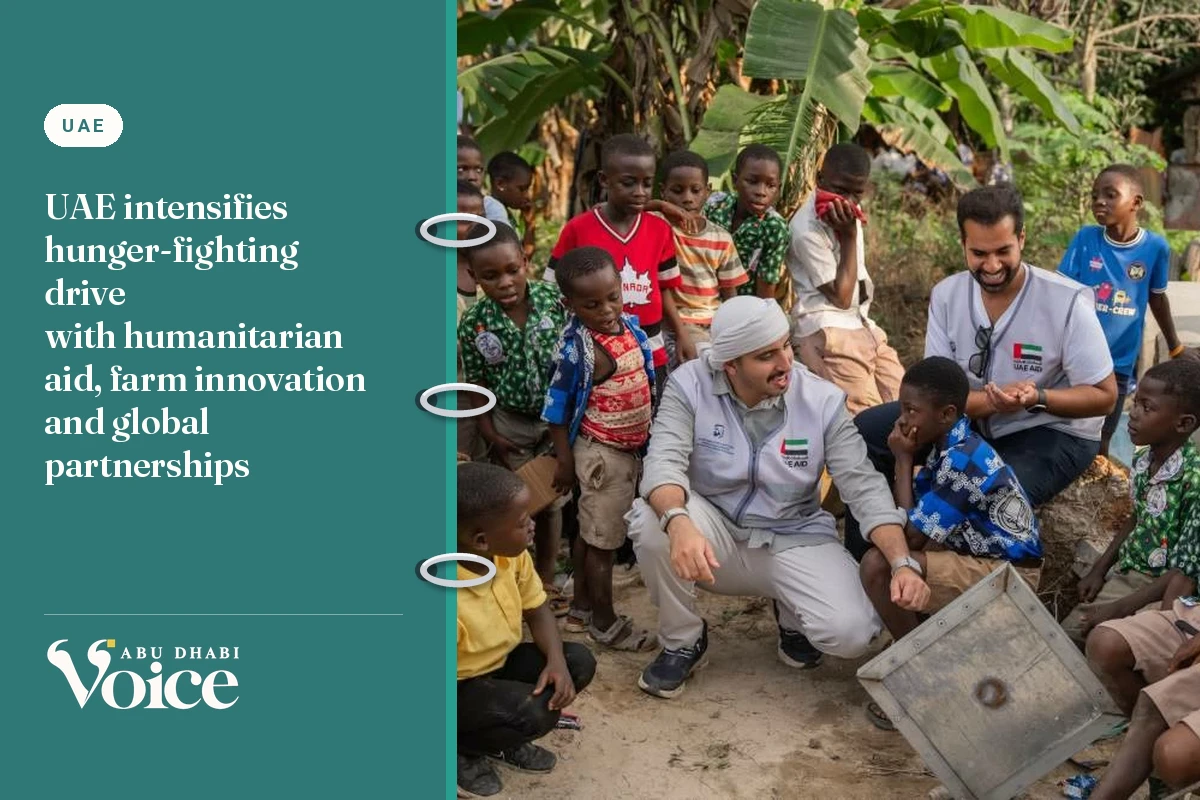
To deliver the campaign, the Mohammed bin Rashid Al Maktoum Global Initiatives teamed up with UNICEF and the Children’s Investment Fund Foundation in a US$300 million (AED1.0175 billion) partnership, comprising a joint US$100 million contribution from MBRGI and CIFF and a US$200 million mobilisation by UNICEF through its partners. The UAE also gave a US$20 million grant to the World Food Programme for Sudan conflict victims, sent 30 tonnes of food aid to drought‑hit Kenya, allocated US$8 million to Chad for El Niño‑related hunger risks and provided Gaza Strip assistance by land, sea and air under Operation Chivalrous Knight 3. DP World, working with the WFP, moved 5,000 metric tonnes of rice to Burundi, the Democratic Republic of the Congo and Rwanda, helping cover part of the maritime shipping costs. The 1 Billion Acts of Kindness initiative, backed by MBRGI and the Varkey Foundation, was also highlighted as part of the broader humanitarian push; a photograph from the campaign supplied by WAM illustrated the effort.
Innovative agriculture and logistics
Domestically, the UAE introduced the National Programme to Strengthen Supply Chain Resilience in the UAE, aiming to broaden import sources, boost local manufacturing and agriculture and deepen international partnerships. The country hosted World Food Week in October, taking advantage of its position linking Asia, Africa and Europe and its advanced logistics infrastructure.
Food exports and related trade reached US$41.8 billion in 2025, while Dubai’s Food Tech Valley secured US$50 billion of investment for a sustainable food ecosystem that includes vertical and hydroponic farming as well as precision fermentation technologies. These steps complement the nation’s broader push to modernise agriculture and secure food supplies.
Policy, partnerships and international engagement
In April the UAE gained a seat on the WFP Executive Board for the 2026‑2028 term, expanding its role from donor to guide of global hunger‑relief efforts, supply‑chain oversight and delivery to the most vulnerable. In September the Ministry of Climate Change and Environment convened a High‑Level Ministerial Majlis and Implementation Dialogue entitled From Water Stress to Implementation – Building Country Pathways for Water‑Secure Agriculture at the UAE’s Permanent Mission to the United Nations in New York, as part of its participation in the 81st session of the UN General Assembly. Discussions centred on turning national priorities into concrete projects, widening access to expertise, data and technology, improving irrigation efficiency, re‑using water, protecting groundwater, managing salinity and advancing digital solutions.
The roundtable is laying the groundwork for the 2026 UN Water Conference, which Abu Dhabi will host from 8 to 10 December, building on the outcomes of COP28, including the UAE Declaration on Sustainable Agriculture, Resilient Food Systems and Climate Action. Dubai Cares, an MBRGI affiliate, launched the Feed a Child, Build a Kitchen scheme to support Kenya’s environmentally friendly school meals programme, with plans to extend it across sub‑Saharan Africa; the initiative notes that over 90 percent of African children lack a balanced diet and 60 percent of Kenyan children suffer from malnutrition, affecting attendance, concentration and achievement. The UAE and the United States co‑lead the Agriculture Innovation Mission for Climate (AIM for Climate), launched in November 2021 with a US$4 billion commitment; by May 2023 the initiative’s investments had risen to more than US$13 billion. At COP28, hosted by the Emirates, 134 countries endorsed a declaration on sustainable agriculture, resilient food systems and climate action, and more than US$2.5 billion was mobilised to tackle food‑security challenges linked to climate change. Finally, the UAE is implementing its National Food Security Strategy 2051, which comprises 38 short‑ and long‑term actions and aims to place the nation at the top of the Food Security Index by 2051.