From parks to power: How a third-generation Abu Dhabi girl is shaping the city’s future
For 23-year-old Malak Halabi, the green fence that lines the highway into Abu Dhabi is not just a ribbon of vegetation against the desert—it is a visceral signal of arrival. ‘The moment I start seeing it, my nervous system calms down, and I know I’m home,’ she says. Born at the Corniche hospital, where her own mother was born, Halabi is a third-generation resident of a city that has transformed from a fishing village into a global capital. An electrical engineer by training, she works in renewable energy, serves as a youth delegate for IRENA, Masdar and IEEE, and founded a sustainable floral workshop business called Lu Flora. Her story weaves together personal heritage, professional ambition and a deep sense of belonging.
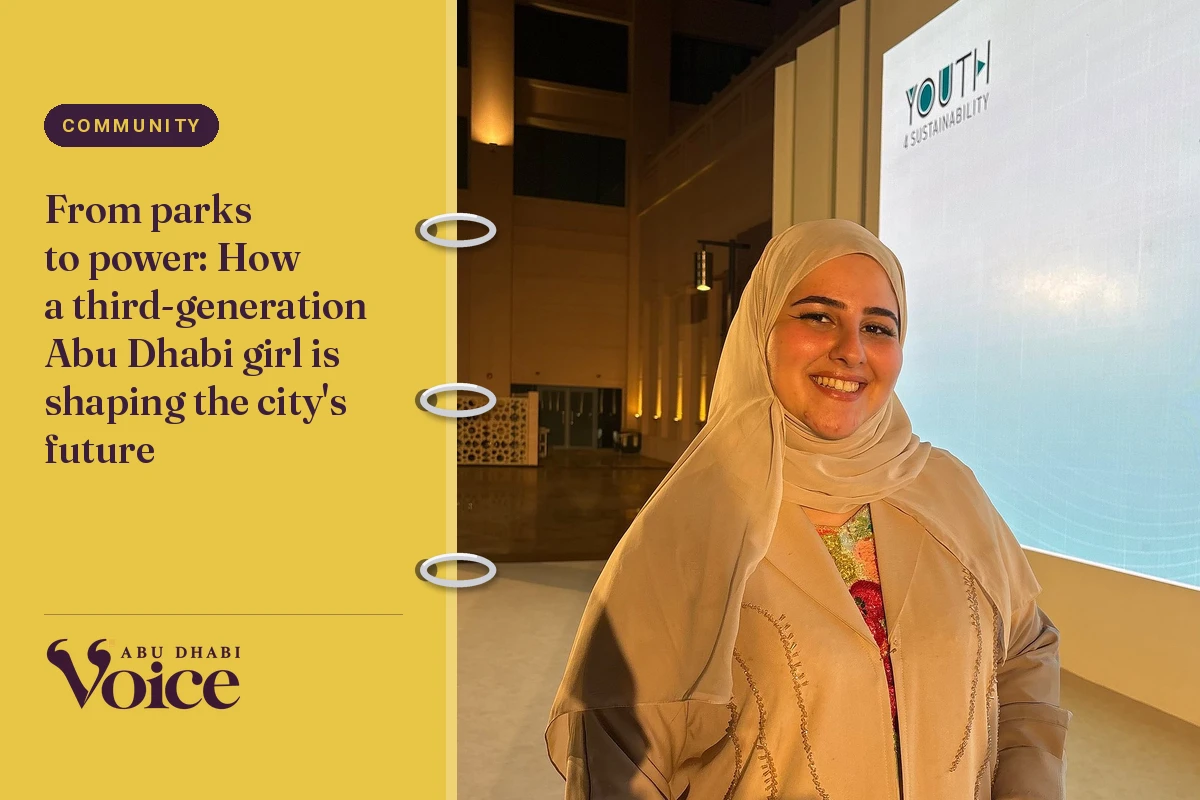
A rare third-generation Abu Dhabi girl
Halabi describes herself as a third-generation Abu Dhabi girl—a rarity in a country where most families arrived within living memory. ‘Abu Dhabi is the first home I have ever recognised,’ she says. ‘I don’t feel like a resident. I belong here, and this is my country as well.’ Her connection to the city is rooted in family history: her grandparents arrived from Lebanon in 1969, two years before the UAE was founded. Her grandfather worked at the Abu Dhabi ports in the finance department, witnessing the arrival of early ships. Her grandmother recalls waiting for fabric to arrive from distant places and then taking it to the tailor. Halabi still treasures her mother’s dresses from the 1980s and 1990s, admiring their cut and colour.
Her parents are both university lecturers who began their careers at the first branch of Ajman University in the capital. Her mother attended school in Abu Dhabi and often speaks of Sheikh Zayed with emotion. ‘Whenever she mentions him, she gets emotional, because she loves him so much. He’s also her father. He’s everyone’s father,’ Halabi says. Her grandparents instilled in her the belief that a person without a past has no future, and that roots must be planted before anything can grow.
Engineering a sustainable future
Halabi studied electrical engineering in Fujairah, specialising in power and renewable energy—a field she says quietly shapes the country’s future. Through Masdar’s youth and sustainability program, she became a youth delegate for the net-zero movement and took part in youth engagement around COP28, the global climate summit hosted in the UAE. Today she represents IRENA, Masdar and IEEE as a youth delegate, and is an ambassador with the Arabic Congress. She sees her role not as a personal triumph but as evidence of opportunity. ‘In the UAE, everyone gets opportunities. Whoever moves here will definitely fit in, because there is space for everyone,’ she says.
Sustainability Week is one of her favourite times of the year. She moderates sessions and panel discussions, guiding conversations about the city’s future. She also uses every opportunity to share Abu Dhabi’s culture and heritage with visiting delegates. Over the years, she has taken between 20 and 40 visitors from various nationalities on tours of the city.
Roots in Palestine and the UAE
Halabi’s family is Palestinian, from Haifa and Akka—coastal cities she has never visited but speaks of with inherited longing. Her grandparents came to Abu Dhabi from Lebanon in 1969, when each emirate issued its own passport. Her grandfather carried one that read Abu Dhabi. He remembers how simple life was and how the early ships arrived. Her grandmother recalls buying gold and fabric at Madinat Zayed, the old market.
Halabi grew up near Hadiqat Al Khalidiya, in neighbourhoods ringed with parks. Her childhood days were spent playing from morning until Maghrib. On weekends, her family went to Souk Al Mina for fruit and vegetables, then to Action Zone arcade—now closed but fondly remembered by a generation. At her grandparents’ house, there was a swing, a small farm with chickens, and a garden.
Sanctuary, tradition, and giving back
For Halabi, the Sheikh Zayed Grand Mosque is a sanctuary she returns to repeatedly. During Ramadan, her family prays Tarawih there. This year, as they prayed beneath the open sky, it began to rain. ‘It was so magical,’ she says, describing the rare moment of rain falling over the white stone courtyard.
Her perfect Friday begins with manakish—za’atar flatbreads that her grandparents brought from the Levant. She collects the bread, then her grandparents, and they drive to the Al Kaser area near Heritage Village and Marina Mall. They eat breakfast together in the soft morning light, with no rush. Later, she visits the Zayed National Museum and the Natural History Museum on Saadiyat Island. ‘You walk around and look at the discoveries and think, wow, all of this happened here,’ she says.
There is also a small shawarma shop near Madinat Zayed called Mualiim Hassan that has fed her at every age. ‘They’ve seen me every year of my life—as a seven-year-old, as a fourteen-year-old, and now as a twenty-three-year-old,’ she says. The taste, she adds, reminds her of childhood.
In 2024, as she finished university, Halabi founded Lu Flora, a business centred on sustainable floral arrangement workshops. It has no storefront; it exists wherever people gather. ‘It’s community-based. Wherever the community exists, I exist with it. Whenever I’m needed, I’m there,’ she says. Guests of all ages attend the workshops, creating living art pieces to take home. ‘It’s integrating art, sustainability, creativity, and a space for you to express yourself,’ she explains.
Growing up in Abu Dhabi, Halabi says, gave her a world of languages. Beyond Arabic and English, she speaks Turkish and Urdu, learned from friends. She has travelled to other cities but always carries Abu Dhabi with her. ‘Abu Dhabi and the UAE set a standard for your expectations of other places you visit, because of the quality of life,’ she says. When asked to describe the city in three words, she began with ‘home,’ then corrected herself: ‘My favorite city in the world. The best place ever.’