Abu Dhabi Launches Wildlife Response Network to Boost Rescue and Rehabilitation
Launch of the Abu Dhabi Wildlife Response Network
The Environment Agency – Abu Dhabi (EAD) has unveiled the Abu Dhabi Wildlife Response Network, a collaborative framework that unites government bodies, non‑governmental organisations, academic institutions, private partners and members of the public to improve rapid assistance, coordination and care for animals in distress throughout the emirate.
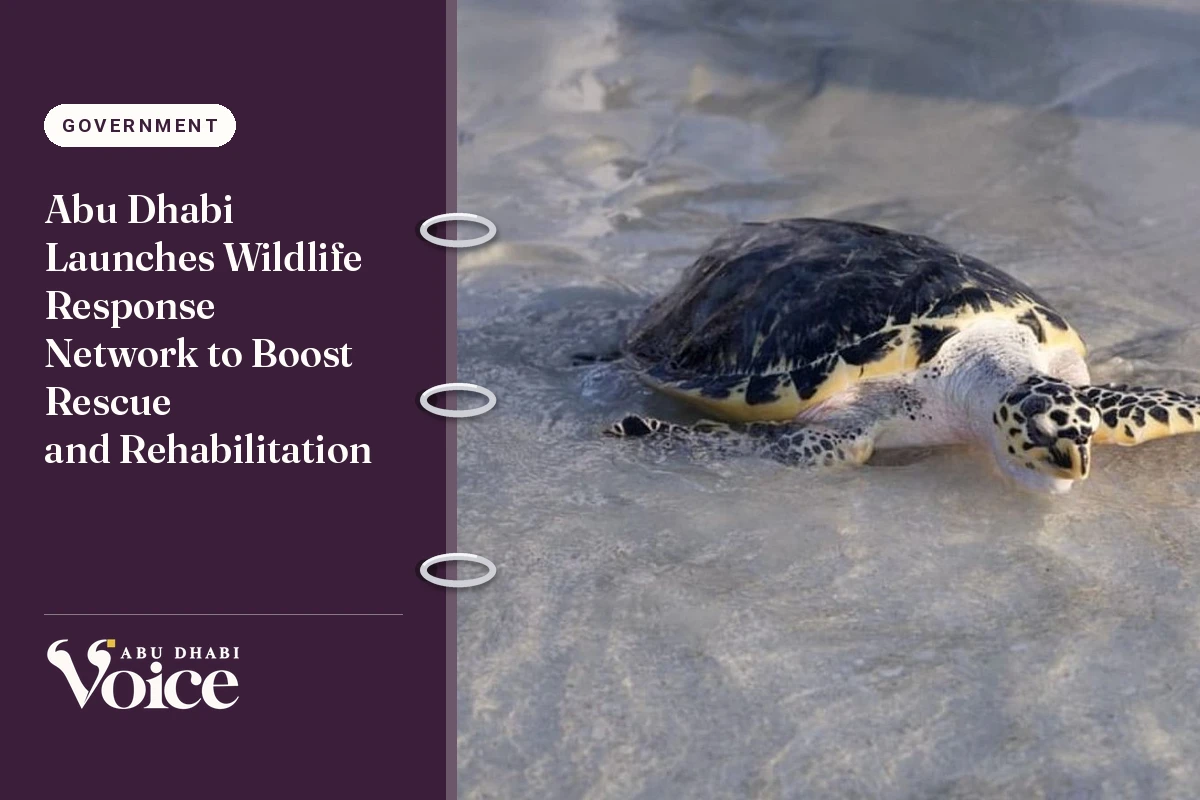
The network was introduced at an event held on Saadiyat Island, where EAD gathered partners, experts and community representatives to showcase its wildlife rescue and rehabilitation work. During the programme, officials presented the network’s objectives, acknowledged contributors who have supported the effort, and released rehabilitated sea turtles back into the waters off Saadiyat Island.
The initiative builds on EAD’s wildlife rescue and rehabilitation activities that began in 2016 with sea turtles and later expanded to cover sea snakes, dugongs, dolphins and various bird species, reflecting the agency’s ongoing commitment to safeguarding Abu Dhabi’s biodiversity.
How the Network Operates
Maitha Mohamed Al Hameli, Acting Executive Director of Terrestrial & Marine Biodiversity at EAD, said the launch demonstrates the agency’s conviction that protecting wildlife depends on swift action, expert knowledge and close cooperation. She added, “Through this network we are providing the care that injured or stranded animals need, giving them the best possible chance to recover and return to their natural habitats, and strengthening Abu Dhabi’s efforts to protect species and conserve biodiversity.”
The network supplies an integrated digital system for recording reports, managing cases and coordinating field responses. When a report is received from the public or a partner, it is logged and assessed; a specialised field team is then dispatched to the site to stabilise the animal if necessary before transferring it to a rehabilitation centre where veterinarians and species‑specific specialists administer care aimed at maximising recovery prospects.
Animals that regain full health are released back into their natural habitats, while those requiring continued attention remain under extended care. Beyond rescue, rehabilitation and release, the network functions as a hub for sharing expertise, scientific insights and aligning stakeholder activities to achieve measurable, lasting outcomes across Abu Dhabi.
Future Plans and Community Role
Information gathered from documented rescue cases, health monitoring, mortality investigations and the identification of emerging environmental pressures will enrich the evidence base for conservation measures, inform species‑recovery strategies and guide long‑term, targeted actions. In the next phase, EAD and its partners intend to enhance the network with real‑time tracking and reporting technologies, continuous training for rescue teams and international cooperation to handle complex wildlife emergencies. Public education and citizen engagement will stay central, reinforcing the community’s role as a key partner in conservation endeavours.
The Abu Dhabi Wildlife Response Network represents an integrated model of collaboration and shared responsibility, underscoring EAD’s dedication to a future defined by sustained care for all living beings and the protection of the emirate’s biodiversity.