Abu Dhabi unveils wildlife rescue network to boost emergency care for animals
Launch and objectives
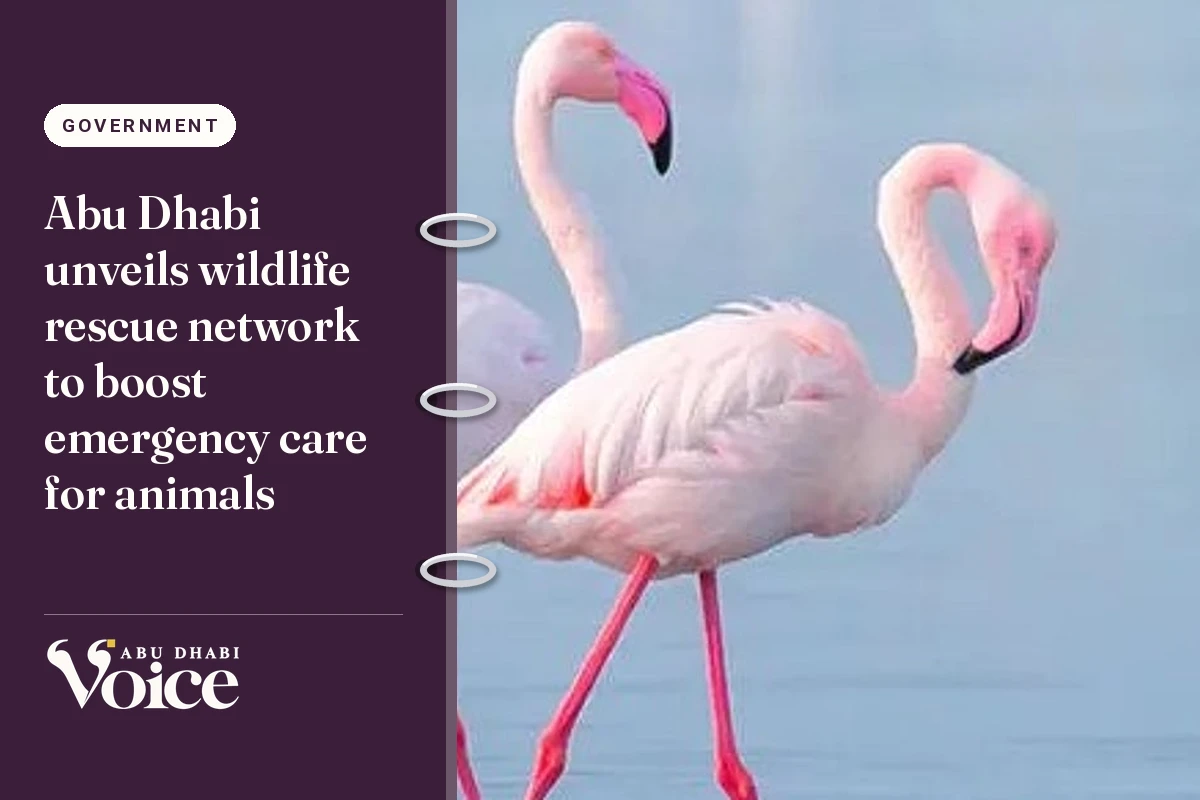
The Environment Agency – Abu Dhabi (EAD) has announced the creation of the Abu Dhabi Wildlife Rescue Network, an initiative that brings together government departments, non‑governmental organisations, academic institutions and private‑sector firms to speed up emergency responses, organise rescue missions and deliver essential care for wildlife across the emirate.
According to EAD, the network operates within an integrated framework that supports timely intervention, successful rehabilitation and the return of animals to their natural habitats whenever their condition permits.
The official launch took place on Saadiyat Island, where a group of rehabilitated sea turtles was released into the waters of the Arabian Gulf. The event was described as more than a symbolic gesture; it marks a new chapter in Abu Dhabi’s and the UAE’s efforts to build a more responsive, coordinated and effective system for handling wildlife emergencies and protecting threatened and endangered species.
The network builds on EAD’s longstanding experience in rescuing sea turtles, sea snakes, dugongs, dolphins and birds, reflecting years of dedicated work to conserve the emirate’s biodiversity.
The launch event on Saadiyat Island was attended by partners, experts and community members, highlighting Abu Dhabi’s commitment to rescue, rehabilitate and protect wildlife. The programme featured a presentation on the network and its rescue and rehabilitation activities, followed by acknowledgment of the partners and individuals who have contributed to these efforts, and concluded with the release of the rehabilitated sea turtles back into their natural habitat off the coast of Saadiyat Island.
EAD’s rescue efforts date back to 2016, when the focus was primarily on sea turtles. Over time the programme expanded to include sea snakes, dugongs, dolphins and birds, demonstrating the agency’s enduring commitment to biodiversity conservation throughout Abu Dhabi.
The launch represents the culmination of years of expertise developed by EAD, the authority responsible for environmental protection and biodiversity conservation in the emirate. Early rescue work concentrated on sea turtles affected by low temperatures or injuries caused by fishing equipment, and later expanded alongside advances in scientific and veterinary capabilities to cover a broader range of marine and terrestrial species.
Operational framework
Maitha Al Hameli, Acting Executive Director of the Terrestrial and Marine Biodiversity Sector at EAD, said the launch reflects the agency’s firm belief that wildlife protection requires three essential elements: rapid response, in‑depth scientific knowledge and close collaboration among different sectors and the wider community.
The network is supported by an integrated digital platform designed to manage wildlife emergencies efficiently and swiftly, from the initial report through treatment and eventual release.
The process begins when members of the public or partner organisations report an animal in distress via official channels, including the Abu Dhabi Government Contact Centre on 800 500.
A specialised field team is then dispatched to assess the situation. Equipped with appropriate first‑aid and rescue tools, the team provides immediate assistance and stabilises the animal’s condition at the scene when necessary.
Injured or distressed animals are transferred to specialised rehabilitation facilities where veterinarians and experts deliver tailored treatment and care. Partner institutions include The National Aquarium and SeaWorld Yas Island Abu Dhabi’s research and rescue facilities. Advanced diagnostic technologies, such as CT scanners designed for marine animals and sophisticated veterinary systems, support the assessment and treatment of complex cases.
Once an animal has fully recovered, it is released back into its natural habitat whenever its condition permits. In selected cases, solar‑powered or other digital tracking devices are fitted to monitor the animal’s movements and behaviour after release, generating valuable data for conservation research. Animals that require further medical attention or monitoring continue to receive appropriate care until they are ready for release, where recovery is possible.
The initiative extends beyond EAD’s own operations, creating a collaborative framework that combines the capabilities and expertise of multiple institutions across the UAE.
Medical and academic institutions contribute specialised diagnostic technologies, veterinary expertise and scientific research. Private‑sector partners provide additional technical and operational capabilities, helping to strengthen the network’s capacity to respond to wildlife emergencies.
Members of the public, beachgoers and fishermen also play a vital role as the first line of response by identifying animals in distress, reporting incidents promptly and participating in awareness campaigns.
Continuous training programmes will further strengthen the capabilities of rescue teams, promote the exchange of practical expertise and support collaboration with local and international specialists.
This coordinated approach is intended to ensure that wildlife rescue operations are not isolated interventions but part of a broader, integrated system that brings together emergency response, veterinary medicine, scientific research and long‑term conservation.
Impact and future outlook
Maitha Al Hameli, Acting Executive Director of the Terrestrial and Marine Biodiversity Sector at EAD, said: “The launch of the Abu Dhabi Wildlife Rescue Network reflects our firm belief that protecting wildlife requires a rapid response, in‑depth knowledge and close collaboration among all stakeholders.
“Every successful rescue is the result of cooperation between our teams, partners, experts and members of the community. Through this network, we provide the necessary care for injured or stranded animals, giving them the best possible chance of recovery and returning to their natural habitats. This strengthens Abu Dhabi’s efforts to protect species and conserve biodiversity.”
Beyond rescue, rehabilitation and release, the network will provide a platform for sharing expertise and scientific insights while coordinating the efforts of relevant entities to strengthen wildlife protection across Abu Dhabi.
Data collected through the documentation of rescue cases, monitoring of species health, investigation of animal mortality and identification of emerging environmental threats will support scientific research and evidence‑based decision‑making.
These insights will also contribute to the development of more effective strategies for species recovery and long‑term conservation, enabling authorities and researchers to identify recurring threats, assess environmental pressures and refine future interventions.
By combining field experience with systematic data collection and analysis, the network is expected to strengthen the scientific foundations of wildlife management and improve the effectiveness of conservation measures.
In the coming phase, EAD and its partners will continue to expand community participation in identifying wildlife emergencies and reporting animals in distress.
Awareness campaigns will promote environmental responsibility and sustainable practices, encouraging residents and visitors to play a more active role in protecting wildlife and preserving natural habitats.
Investment in continuous training will also help build the capacity of rescue teams, facilitate the exchange of knowledge and strengthen local and international cooperation.
Research and innovation in wildlife rescue and rehabilitation will remain important components of these efforts.
The initiative recognises that effective wildlife conservation depends not only on specialised facilities and expert teams but also on public awareness, timely reporting and a shared commitment to protecting the natural environment.
The establishment of the network supports Abu Dhabi’s broader environmental ambitions and the UAE’s commitment to preserving natural habitats and safeguarding biodiversity.
Abu Dhabi is home to wildlife populations of considerable ecological importance, making effective rescue and rehabilitation systems particularly significant.
The emirate’s waters host the world’s second‑largest population of dugongs, with more than 3,000 individuals. This makes the conservation of the species a priority of international significance and highlights the importance of protecting marine habitats and responding effectively to threats affecting these animals.
Abu Dhabi’s beaches, islands and marine protected areas provide important habitats for thousands of sea turtles, particularly green turtles and critically endangered hawksbill turtles. Rescue, rehabilitation and the safe release of injured animals form an important part of wider efforts to protect these species and maintain healthy marine ecosystems.
EAD oversees the Zayed Network of Natural Reserves, which encompasses extensive terrestrial and marine areas across the emirate. These protected environments play a crucial role in safeguarding biodiversity and providing suitable habitats for rehabilitated animals to return to the wild.
Together, these natural assets underscore the importance of a coordinated rescue network capable of responding to immediate emergencies while contributing to broader environmental conservation objectives.
The launch represents more than a local commitment to protecting endangered animals; it demonstrates how environmental emergencies can be managed through coordinated action involving government authorities, private‑sector organisations, scientific institutions and the wider community.
As Abu Dhabi continues to strengthen its monitoring, rescue and rehabilitation capabilities, the network offers an integrated approach that links immediate intervention with scientific research, public engagement and long‑term species protection.
By building on years of rescue experience and bringing partners together under a unified framework, the initiative reinforces EAD’s commitment to ensuring that wildlife receives the care it needs to recover and return to its natural environment whenever possible.
Ultimately, the Abu Dhabi Wildlife Rescue Network embodies a shared responsibility for protecting the emirate’s natural heritage and safeguarding biodiversity for future generations. It also provides a foundation for more effective, knowledge‑driven and sustainable wildlife conservation, strengthening Abu Dhabi’s contribution to environmental protection at both regional and international levels.