UAE launches five-year health plan to combat extreme heat, dust storms and disease
The Ministry of Health and Prevention (MoHAP) has unveiled the Health Sector Climate Adaptation Plan (2026–2031), a national strategy designed to shield residents from the worsening health impacts of climate change while ensuring medical services remain operational during climate-related crises.
The plan was announced at the Abu Dhabi Future Health Summit, with Ahmed Ali Al Sayegh, Minister of Health and Prevention, and other senior officials in attendance.
From reacting to preventing
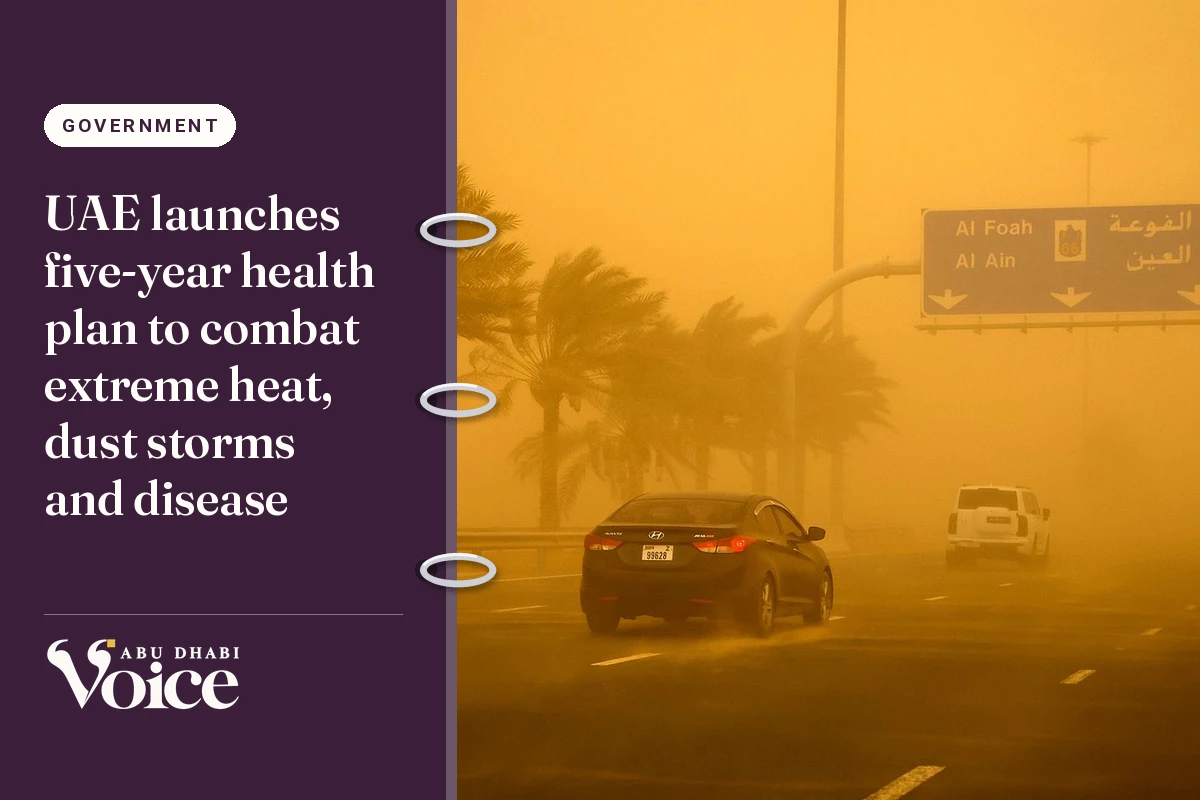
Climate change, the ministry stated, is not merely an environmental challenge but a public health concern. Rising temperatures and humidity increase the risk of heat exhaustion and heatstroke, while placing additional strain on the heart and lungs. Dust storms and declining air quality can trigger asthma and worsen chronic respiratory conditions. Shifting climate patterns may also influence the spread of infectious diseases, and extreme weather events can disrupt hospitals, medical supply chains and access to care, as well as harm mental wellbeing.
The new framework shifts the health system from a reactive posture to one of anticipation, aiming to identify risks and prevent harm before it reaches communities.
Developed in cooperation with the Ministry of Climate Change and Environment and other specialised partners, the plan is part of broader national efforts to strengthen the integration of health and environmental policies. It also aligns with the UAE National Climate Change Adaptation Plan.
Leadership commitment to public health
“Guided by the directives of our wise leadership, the UAE places the protection of people and their quality of life at the heart of its health system,” said Ahmed Ali Al Sayegh, Minister of Health and Prevention. “As our climate changes, the risks to our health change with it. Heat, dust and extreme weather affect people’s health in very real ways. Our responsibility is to anticipate these risks and protect our communities before people fall ill.”
Al Sayegh added: “This plan brings together data, expertise and institutions to build early warning systems and prepare our health services for the health impacts of climate-related events.”
“Successful health adaptation to climate change depends on aligning efforts across the health, environmental and research sectors and turning scientific knowledge into preventive action that protects the community. This will also support the implementation of the UAE’s global commitments, foremost among them the COP28 UAE Declaration on Climate and Health, while contributing to the achievement of the Sustainable Development Goals,” he said.
Six priority areas
The plan is built on a detailed assessment of climate-related health risks specific to the UAE’s conditions, including rising temperatures and humidity, dust storms and other weather events, and their potential effects on human health and healthcare services. It targets six key areas: heat-related illnesses such as heat exhaustion and heatstroke; cardiovascular diseases exacerbated by extreme heat; respiratory diseases linked to dust and poor air quality; vector-borne diseases spread by insects like mosquitoes; water- and food-borne diseases that can increase when high temperatures compromise safety; and mental health issues stemming from the stress and disruption of extreme weather.
These priorities serve as the foundation for developing targeted preventive measures tailored to each risk, while supporting the early detection of changes in disease patterns and the factors that influence them. Special attention is given to protecting vulnerable populations and ensuring health institutions are prepared to respond to evolving needs.
Practical measures and early warnings
The plan focuses on concrete actions: early heat and air-quality warnings so people can take protective steps before exposure leads to illness; resilient healthcare facilities, secure medical supply chains and coordinated emergency plans to ensure essential care continues during disruptions.
Implementation priorities include building surveillance systems for climate-sensitive diseases and improving the integration of health and environmental data to detect early risk indicators. In the immediate term, extreme heat, air quality, early warning systems and continuity of essential care are the central focus.
“The plan helps the health sector turn climate-risk assessments into practical steps that protect people’s health,” said Dr. Hussain Al Rand, Assistant Undersecretary for the Public Health Sector at MoHAP. “This includes developing the skills of healthcare professionals, expanding specialised research, improving emergency preparedness and increasing the resilience of healthcare facilities. The next phase will focus on coordination among relevant entities and implementing priorities against precise indicators, helping to ensure continuity of services, protect populations most vulnerable to climate impacts and enhance the effectiveness of the health response nationwide.”
The plan contributes to the objectives of the ‘We the UAE 2031’ vision and reflects the country’s commitment to a health system that protects people from the effects of a changing climate.