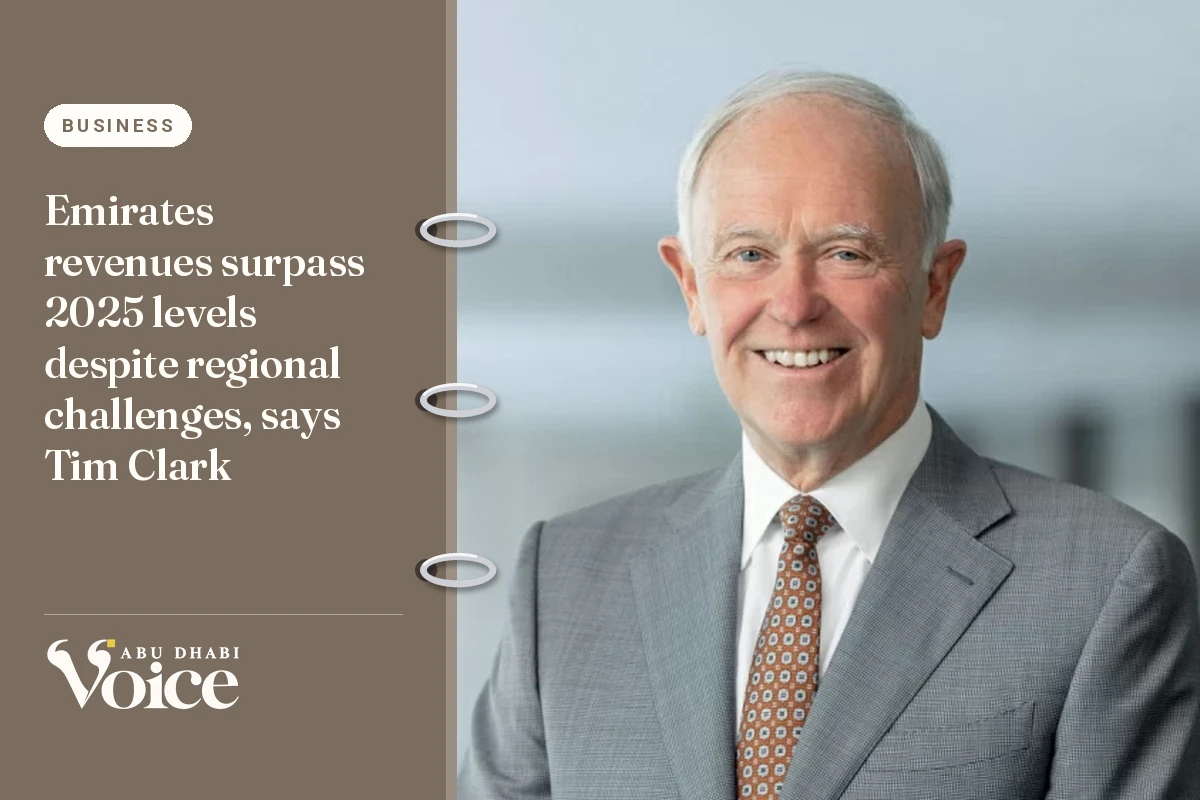
Emirates revenues surpass 2025 levels despite regional challenges, says Tim Clark
Emirates Airline President Sir Tim Clark has reported that the carrier’s revenues during the past week surpassed those recorded in the same period of 2025, despite ongoing regional tensions, airspace closures and rising fuel costs. Speaking at the Routes World 2026 conference in Frankfurt, Clark said the airline has restored approximately 91% of its pre-crisis operating capacity, with demand for travel remaining strong across most of its global network.
Revenue growth amid challenges
Clark expressed confidence that travel demand will recover further once regional stability improves and the aviation sector normalises. He noted that, were it not for higher fuel expenses, the airline would be outperforming last year’s results. The carrier recorded its highest-ever profits in 2025, and last week’s revenues have already exceeded that year’s comparable period.
Strong demand for Emirates’ services reflects passengers’ continued willingness to fly despite exceptional circumstances affecting the region, Clark added. The airline’s performance stands in contrast to broader regional challenges: International Air Transport Association (IATA) data shows a 14.2% decline in international travel demand for Middle Eastern airlines in August compared with the same month a year earlier.
Navigating crises
Clark emphasised that Emirates has extensive experience handling geopolitical and economic upheavals since its founding in 1985 during the Iran-Iraq War. He recalled that at the time, ships were being bombed off the coast of Dubai and the UAE. These early conditions, he said, helped build an operational model centred on risk management and proactive planning, reflecting Dubai’s role as a global hub connecting markets and continents.
While crises differ in nature, Clark noted their impact on aviation is often similar, and travel demand has consistently bounced back after major disruptions such as the global financial crisis and the COVID-19 pandemic.
Safety first
Clark stressed that the safety of passengers, aircraft and crew remains Emirates’ top priority, even when precautionary measures lead to additional operational costs. The airline’s operations control centre has repositioned aircraft and kept some flights at various locations across its network. Emirates has also carried extra fuel reserves to allow aircraft to return to their departure airports if necessary. For example, some flights between Paris and Dubai carried enough reserve fuel to return to Paris rather than proceed into potentially unsafe airspace.
“I told the teams not to worry about the additional fuel costs, as my priority is the safety of the aircraft and the people,” Clark said, adding that financial considerations take a back seat when operational safety is at stake. On fuel prices, he acknowledged that high oil costs remain a major challenge, particularly as some flights now take longer routes and carry extra fuel for emergencies. However, he noted that Emirates has previously operated when oil prices reached $140 a barrel.
“Dubai is operating completely normally, and Emirates is performing exceptionally well in its operations,” Clark said.
To reassure passengers worried about being stranded abroad, Emirates has introduced additional safeguards that Clark described as “insurance” for travellers. These include extending hotel stays and arranging return travel to passengers’ home countries if disruptions affect their plans. Clark said these measures have helped restore confidence among leisure travellers, while demand from Asian markets, including China, remains particularly strong. He expressed optimism about a new wave of travel growth once tensions subside, with postponed trips expected to return to the market.
Airbus on regional resilience
At the same conference, Grinne van den Berg, Vice President and Head of Commercial Airplane Sales for the Middle East at Airbus, said the Gulf’s strategic location and global air connectivity enhance the resilience of its airlines. She explained that the region’s eight-hour flight radius gives access to about 80% of the world’s population, linking established European markets with fast-growing population centres in South Asia and Africa, as well as major commercial hubs across Asia.
Van den Berg noted that aviation hubs like Dubai and Doha play a vital role in connecting secondary cities across continents, creating travel flows that may not be commercially viable through direct flights alone. She added that Middle East airspace closures have increased flight times by 45 to 90 minutes, leading to higher fuel consumption, lower aircraft utilisation, and in some cases making certain routes commercially unviable. The Airbus executive said maintaining operational flexibility will become even more important as airlines adapt to further airspace restrictions and shifts in travel demand.