Abu Dhabi school secures LEED Platinum certification, becoming first in Middle East
While many school buildings are assessed by the quality of their classrooms, this campus is also evaluated on its energy consumption, water usage and the air students breathe.
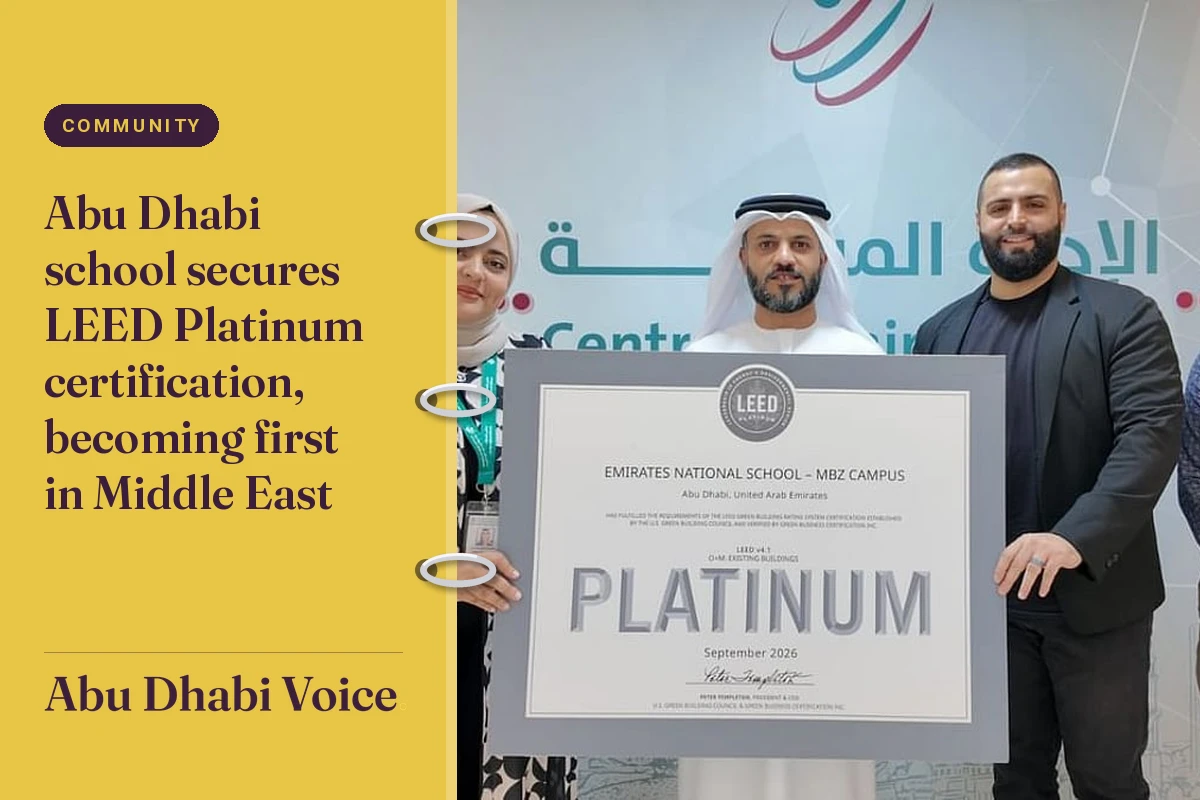
Emirates National Schools’ Mohamed bin Zayed City Campus has secured LEED Platinum certification, the highest accolade in the Leadership in Energy and Environmental Design system, marking a first for any school campus in the Middle East.
LEED Platinum achievement
The campus is the first school facility in the Middle East to attain this level and, globally, it ranks seventh among schools that offer the same grade range.
What the certification evaluates
LEED is administered by the US Green Building Council and the assessment looks at how a building performs rather than how it looks, recognising results in energy and water efficiency, resource management, indoor environmental quality and the reduction of environmental impact.
ENS’s broader green record
The Platinum rating is not the first LEED certification for the Emirates National Schools family; its campuses in Abu Dhabi, Al Ain, Sharjah and Ras Al Khaimah have each achieved LEED Gold, giving the organisation certified sites in four emirates alongside the Platinum‑rated Mohamed bin Zayed City Campus.
Leadership comment
For Lachlan Ewen MacKinnon, Director‑General of ENS, the certification fits into a larger picture.
“The LEED Platinum certification achieved by the Mohamed bin Zayed City Campus reflects our vision to develop educational institutions grounded in global standards and invest in the future of generations. The LEED Gold certifications achieved by several of our campuses also demonstrate that this commitment extends across our educational system.” he said.
He also linked the building to the experience of the students who use it.
“Sustainability is directly connected to our vision of preparing future leaders. The educational environment is an integral part of the student experience, and we are committed to ensuring that our schools reflect the values of responsibility, sustainability and the conscious use of resources.”
Future plans
ENS says it will continue to develop its infrastructure in line with global sustainability standards, with a view to supporting the quality of education and responding to the needs of future generations.