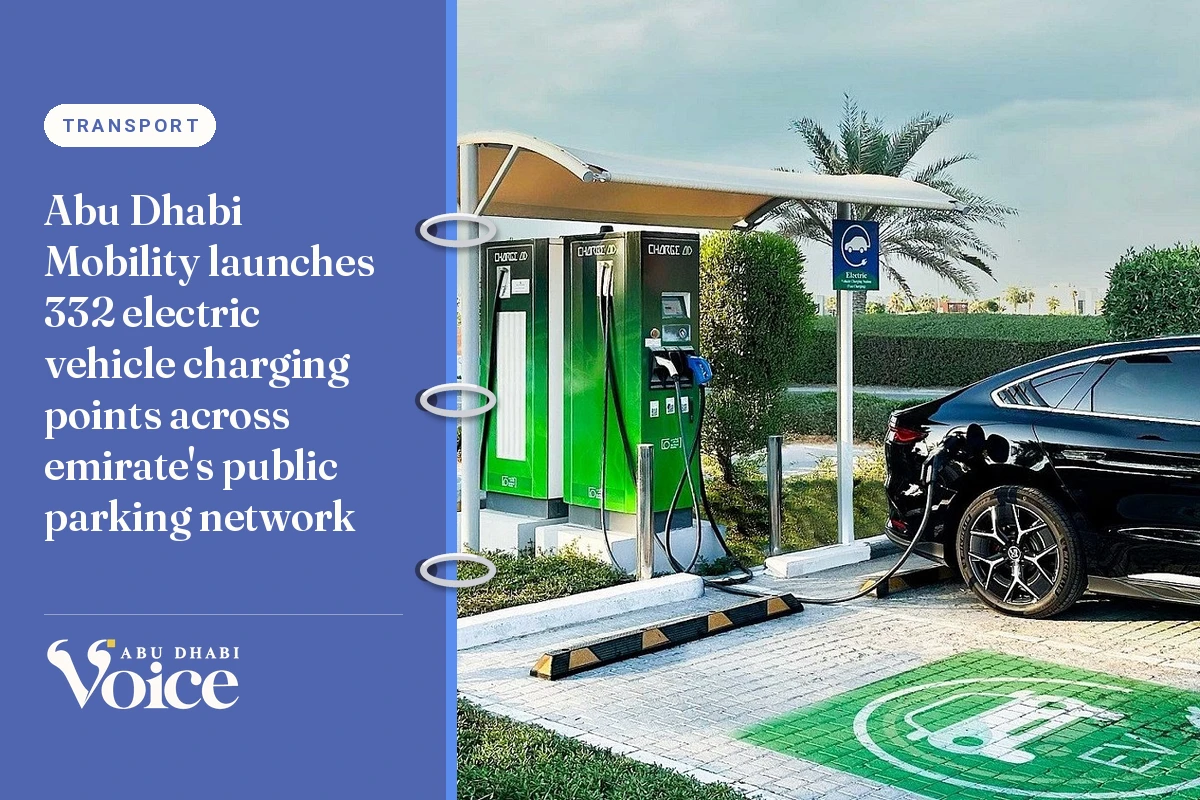
Abu Dhabi Mobility launches 332 electric vehicle charging points across emirate’s public parking network
Abu Dhabi Mobility, the operating arm of the Integrated Transport Centre under the Department of Municipalities and Transport, has brought the first tranche of electric vehicle charging infrastructure into service across public parking bays managed by the Mawaqif system. The rollout, carried out in partnership with Q Mobility, adds 244 charging units supplying 332 individual charging points, giving drivers the ability to power their vehicles while parked in designated bays and advancing the emirate’s shift toward cleaner transport.
First phase covers three major urban zones
The initial phase targets 1,000 charging units spread over 405 sites in ten principal districts spanning Abu Dhabi City, Al Ain City and the Al Dhafra Region. The network mixes standard 22 kW chargers with faster units ranging from 60 kW to 160 kW, providing options suited to different vehicle models and dwell times.
Read also: Abu Dhabi Hazardous Materials Centre warns of toxic gas dangers from mixing household cleaners
Ambitious 2032 target set for full network
Under a phased expansion plan, the project aims to install 4,500 charging units offering more than 9,000 charging points across roughly 2,250 locations by 2032. The schedule is designed to keep pace with expected growth in demand for electric mobility services.
Read also: Founder's Memorial in Abu Dhabi blends art, history and national values
Leadership frames project as strategic milestone
Eng Hamad Adel Al Afeefi, Executive Director of the Intelligent Transportation Systems Sector at the Integrated Transport Centre, described the launch as a practical step toward realising the Centre’s Low and Zero-Emission Vehicle Strategy. He said integrating charging into the public parking network makes electric vehicles easier to use and strengthens Abu Dhabi’s readiness for the sector’s rapid expansion in the coming years.
Read also: LifeBot launches medical command network at Abu Dhabi military medicine congress
Public-private model draws specialist firms
The initiative operates through a public-private partnership governed by concession agreements that cover supply, installation, operation and maintenance of the units. ChargePoint, Tatweer Middle East & Africa and Loop Global are named as the commercial partners deploying and running the network across the emirate.
Read also: Abu Dhabi property deals hit record highs as global investors gather for IREIS 2026
User access via QR codes and dedicated apps
Drivers can scan QR codes posted on each unit to download the relevant charging application, then follow on-screen instructions to locate a compatible station, verify connector fit, review approved tariffs and reach technical support using contacts displayed on the equipment. Bays are reserved exclusively for active charging and must be cleared immediately after use; standard Mawaqif parking fees continue to apply while charging costs follow the tariffs set by the station operators.
Compliance and quality assured
All installed units meet the emirate’s regulatory requirements and technical specifications, including safety and quality standards mandated by the relevant authorities, to ensure reliable and efficient service. The project forms part of the Integrated Transport Centre’s broader drive to build an integrated, sustainable mobility system and to leverage private-sector expertise and investment to improve the user experience.
More in Transport