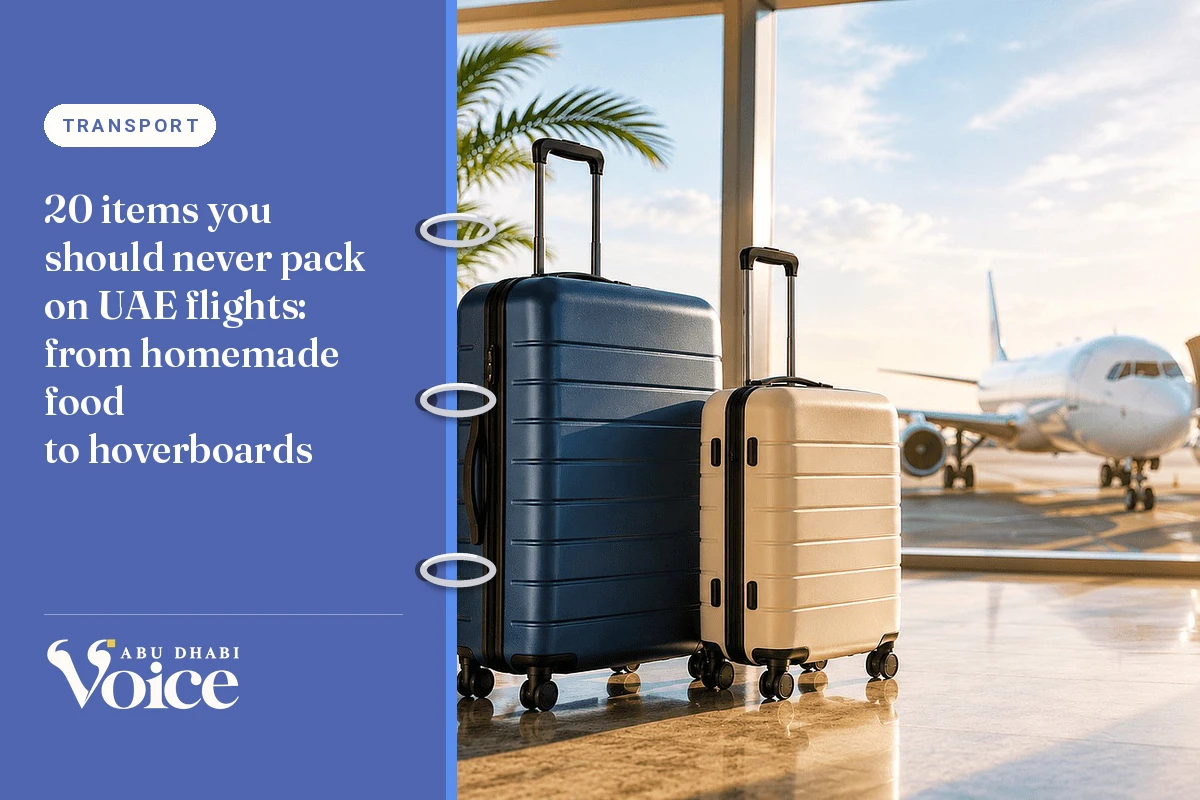
20 items you should never pack on UAE flights: from homemade food to hoverboards
Packing for a holiday or trip home requires careful checking. What seems harmless at home — a jar of pickles, a bag of spices, a homemade meal — could be barred by airline security or confiscated upon arrival. Travellers flying from the UAE on Emirates, Etihad, flydubai or Air Arabia should also remember that an airline may allow an item on board while the destination country forbids its import. This is especially relevant for food, medicines, agricultural products and other restricted goods.
Food items to reconsider before packing
Food is one of the easiest categories to overlook. Airline baggage restrictions govern what can travel on the aircraft, while customs authorities decide what can enter a country. Dubai Customs publishes its own list of permitted and prohibited items for travellers entering the UAE. Cooked food and homemade food are explicitly listed as prohibited, so a home-cooked meal, packed lunch or leftovers cannot automatically be brought into the country. The list does not cover every possible product or circumstance, so travellers should confirm the rules with Dubai Customs before travelling if they need to carry a specific food item. Homemade food intended for family rather than sale is not automatically allowed.
Poppy seeds appear on Dubai Customs’ prohibited-items list under narcotic drugs. Travellers should not assume they are permitted simply because they are sold as a cooking ingredient at their origin. Check the UAE’s current import rules before packing poppy seeds or any products containing them.
Etihad Airways prohibits strong-smelling perishable items on its aircraft, including durian, champedek, pedalai, marang and jackfruit. This restriction applies to carriage on the plane and does not necessarily mean each fruit is banned under UAE customs law. Other fresh fruit, vegetables, meat and dairy products may face restrictions at the destination, so travellers must check the applicable customs rules before departing.
Emirates’ prohibited-items guidance includes perishable food, wet food or meat products, frozen food, and food or beverages requiring refrigeration or other environmental controls. The airline also lists ready-to-eat meals, including meals ready to eat (MREs). Dry ice is subject to dangerous-goods restrictions. Food that spoils easily may require storage conditions not guaranteed during a flight or baggage handling.
Emirates lists pork products and pork flavouring, food containing animal gelatine, and certain types of vinegar among items prohibited on routes to the Gulf Cooperation Council (GCC) states and most Muslim countries. The exact restrictions depend on the destination and the product’s ingredients. Travellers should check Emirates’ current guidance instead of assuming all packaged food is allowed. Airline restrictions should not be treated as a complete statement of UAE import law.
Groceries from India: specific restrictions
Travellers carrying groceries from India should check the rules for each item. The item-specific baggage guidance supplied for this article lists the following restrictions: copra and crushed dry coconut are prohibited; powdered and whole spices, including chilli, are not permitted in cabin baggage but are allowed in checked baggage; regular coconut is prohibited in cabin baggage but permitted in checked baggage; crushed coconut with green tissue is permitted in both cabin and checked baggage; ghee and cooking oil are permitted in both, subject to cabin liquid restrictions, with a checked-baggage limit of 5 kilograms or 5 litres per passenger; pickles are generally allowed in both baggage types, while chilli pickle is restricted to checked baggage. These item-specific rules should be verified with the operating airline and the relevant customs authority. Permission to carry food on an aircraft does not necessarily mean it can be imported into the UAE.
Dubai Customs’ published guidance identifies betel leaves, or paan, as prohibited. It also states that food items in commercial quantities cannot be brought in by travellers under individual names. If you are carrying large amounts of packaged food or groceries, check the customs requirements. Dividing a large quantity among personal bags does not automatically make it acceptable.
Soups, sauces, jams and pastes may be subject to cabin baggage liquid limits. Under flydubai’s hand baggage guidance, liquid containers generally must not exceed 100 millilitres each and must fit into one transparent, resealable 1-litre bag, subject to applicable exemptions and the airline’s current rules. A jar of sauce or pickle may be allowed in checked baggage even when it cannot go through cabin security. Check for leakage risks and destination import restrictions before packing it.
Emirates states that exemptions may apply to baby milk, baby food, medication and special dietary requirements, but passengers may need suitable evidence to verify the nature of these items. Not every container is automatically exempt from liquid screening. Check the airline’s instructions for your specific route and keep relevant items accessible for inspection.
Zamzam water is subject to specific packaging and baggage conditions. Emirates says eligible passengers travelling for Haj or Umrah on itineraries including Madinah or Jeddah may carry up to five litres in addition to their checked baggage allowance, provided the water is appropriately packaged in a sealed container. Air Arabia allows one five-litre bottle free of charge for passengers travelling from Saudi Arabia, subject to conditions including purchase from an authorised airport outlet and packaging in a sealed container designed for air transport. Do not pack Zamzam water in an ordinary bottle and assume it will be accepted. Check the latest requirements published by Emirates or Air Arabia, including route eligibility and packaging rules.
Non-food items that may be banned
Food is not the only category to watch. The following items are also prohibited or restricted under airline baggage and dangerous-goods rules. Requirements vary by carrier, route and baggage type.
11. Fireworks and explosives: flydubai lists fireworks, ammunition, flares and other explosives among prohibited items.
12. Pepper spray and tasers: Prohibited under the supplied airline guidance.
13. Hoverboards: Motorised self-balancing devices may not be accepted, even if the battery is removed.
14. Motorised suitcases: Check restrictions on electric rideable luggage and smart bags.
15. Power banks: Generally must be carried in cabin baggage, subject to airline limits.
16. Spare batteries: Protect battery terminals and follow the airline’s packing rules.
17. Oversized lithium batteries: Some exceed permitted limits or require airline approval.
18. E-cigarettes: Generally must be carried in cabin baggage, not checked luggage.
19. Knives and sharp tools: Many are prohibited in cabin baggage; some sporting equipment is also restricted.
20. Hazardous substances: Flammable liquids, compressed gases, poisons and corrosive chemicals may be prohibited as dangerous goods.
Check the latest guidance from your operating airline before packing any of these items.
Common mistakes and how to avoid delays
A few simple checks can prevent a last-minute delay or an item being confiscated. Common mistakes include assuming airline approval means customs approval, packing homemade food without checking, putting liquid foods in your cabin bag, forgetting about batteries, and carrying restricted food in large quantities. Dubai Customs states that food in commercial quantities cannot be brought in by travellers under individual names.
Your airline: Review the latest baggage rules for Emirates, Etihad, flydubai or Air Arabia, as applicable. Your baggage type: Confirm whether an item is allowed in cabin baggage, checked baggage, both or neither. Your destination and transit countries: Check customs rules for food, medicines, seeds, agricultural products and controlled substances. The safest way to avoid trouble at the airport is to check the rules before packing, especially if you are carrying groceries, homemade dishes, spices, liquids or gifts for family. Remember that airline baggage restrictions and customs import rules are different. An item can be allowed on the aircraft but prohibited on arrival, and a product that is legal where you bought it may be restricted elsewhere. When in doubt, contact your airline and the destination customs authority before leaving home. For UAE entry rules, consult Dubai Customs’ permitted and prohibited items guidance. Also check the latest official baggage guidance from your airline, as requirements change by route and over time.