Dubai closes Emirates Road lanes and DWC tunnel for six days of driverless taxi tests
Roads affected and closure times
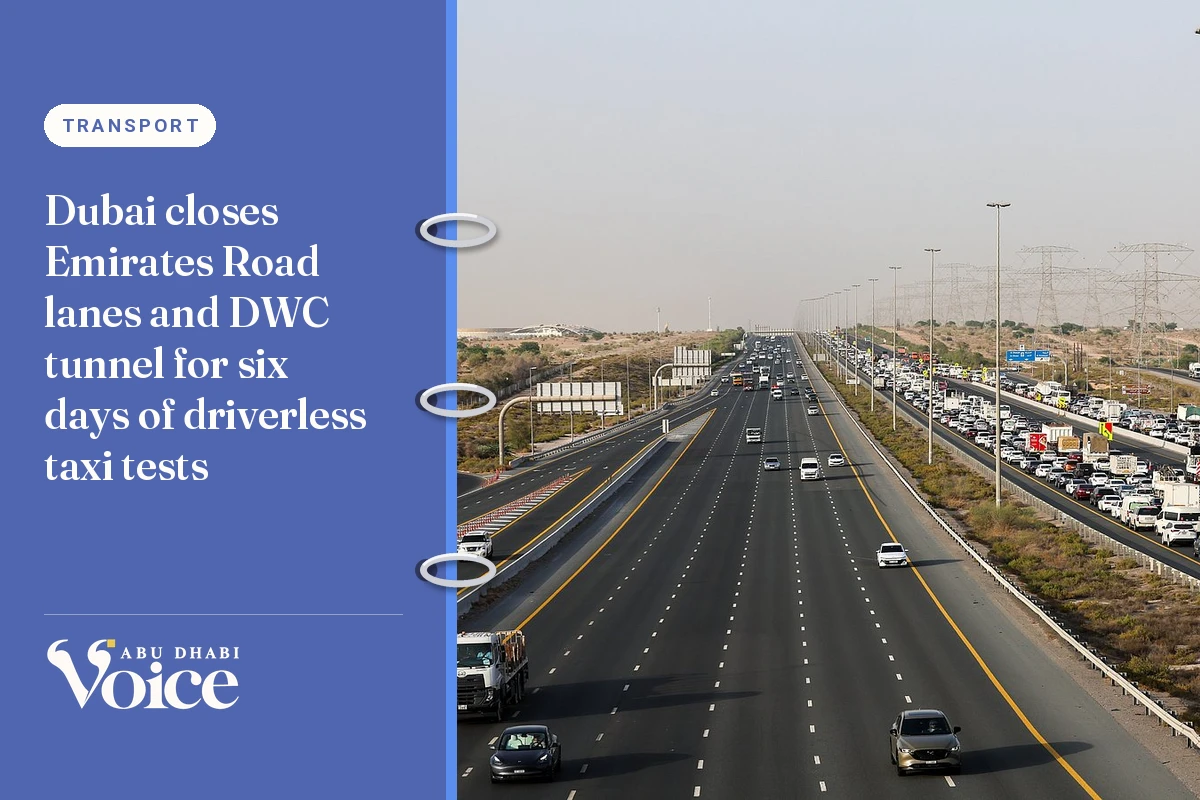
Dubai motorists should expect daytime disruption on the roads this week, with three lanes on Emirates Road (E611) and the Al Maktoum International Airport Tunnel set to close for six days. The Roads and Transport Authority (RTA) said the restrictions will be in force from Monday 26 October to Saturday 31 October 2026 so that autonomous taxi operators can undertake highway tests.
The closures will be enforced each day between 9am and 4pm, a period that may affect commuters, people travelling between emirates and passengers heading to Al Maktoum International Airport (DWC).
Two temporary traffic restrictions have been announced: three lanes on Emirates Road will be closed opposite Al Maktoum International Airport, and the airport tunnel will be fully closed in both directions. Motorists are advised to follow directional signs, check traffic conditions before setting off and allow extra time for their journeys.
The closure schedule is as follows: dates run from Monday 26 October to Saturday 31 October 2026; timings are daily from 9am to 4pm; and the affected areas are Emirates Road opposite Al Maktoum International Airport and the airport tunnel.
Drivers travelling through the area during these hours should consider alternative routes where appropriate and check live traffic updates before leaving.
Alternative routes and travel advice
The most suitable alternative route will depend on a driver’s starting point, destination and direction of travel. Since surrounding roads may also experience congestion, motorists should check live navigation guidance before choosing a route.
E311, which connects Dubai with Sharjah and the northern emirates, may offer an alternative to parts of E611 for some journeys. However, it is not a direct replacement for every trip to DWC, so drivers should verify their route and estimated travel time before diverting.
Al Khail Road serves several residential and commercial areas across Dubai and may be useful for some cross-city journeys. Its suitability will depend on the driver’s starting point and destination, and those heading to DWC should check whether it offers a practical connection.
Sheikh Zayed Road, one of Dubai’s main highways, may be an option for some journeys across the city. Reaching DWC from E11 may require additional connections and a longer drive, so live navigation directions should be checked before setting off.
There is no single alternative route suitable for every motorist affected by the closures. Before leaving, drivers should check live traffic conditions using a navigation app, compare journey times using E311, E44 and E11 where relevant, follow RTA diversion signs and traffic instructions, avoid last-minute lane changes and not enter restricted sections.
The RTA notice confirms the lane closures and tunnel shutdown but does not identify these highways as officially designated diversions. Official signage and current navigation guidance should be followed.
Advice for airport passengers
Passengers travelling to or from DWC should allow extra time, as the E611 lane closures and tunnel shutdown could affect road access during the restriction hours. Public transport may help cover part of the journey, and passengers should check RTA Metro and bus connections, allow extra time for transfers and plan their route in advance, as there is no direct Metro connection to DWC.
Other advice includes leaving earlier, reviewing live traffic conditions before setting off, following diversion signs and using a suitable alternative route where necessary. Passengers should also confirm their flight status and their airline’s recommended airport arrival time.
Congestion could affect taxi and ride-hailing journeys, so extra time should be allowed for those trips. The announced road restrictions do not, by themselves, indicate any disruption to flight operations.
Public transport may be a practical option for commuters who want to avoid driving through the affected area. Metro and bus routes should be checked to see whether they cover part of the journey, and depending on the starting point, combining public transport with a taxi for the final leg could be considered. Passengers should check the latest service information and allow sufficient time for transfers, and should not assume there is a direct Metro or bus connection to every part of DWC.
Dubai’s driverless taxi programme
The closures will allow autonomous taxi companies to conduct highway testing as Dubai expands its driverless transport network. The tests form part of the emirate’s wider push towards smart mobility and the commercial deployment of autonomous vehicles.
Dubai has already launched commercial autonomous taxi services in areas including Umm Suqeim and Jumeirah, with vehicles available through Uber and the Apollo Go app. The latest testing is another step towards integrating driverless vehicles into real-world traffic conditions.
Dubai is expanding its driverless taxi services as part of the Dubai Self-Driving Transport Strategy, moving from testing towards commercial passenger journeys. Commercial services are operating in Umm Suqeim and Jumeirah, with Apollo Go and WeRide part of the rollout and support from local transport partners. WeRide taxis are available through Uber, while Apollo Go rides can be booked through its own app.
The initial rollout includes 100 autonomous taxis, with plans to expand in stages as demand grows. Pony.ai is also involved in the RTA’s wider autonomous mobility programme. The UAE is also working towards broader use of autonomous vehicles, including taxis and delivery vans.
Figures released by the RTA in August 2026 show the progress of Dubai’s driverless taxi services: more than 4 million kilometres travelled since launch, 7,613 passenger trips completed, 144 vehicles in the fleet including 48 in active operation, around 50 trips a day completed and 97% customer satisfaction, according to the RTA.
Dubai aims to make 25% of all transport trips autonomous by 2030. Robotaxis are being integrated into the emirate’s wider transport network as demand for public transport, taxis and shared mobility grows. RTA figures released in August showed that public transport, shared mobility and taxis carried 348 million riders in the first half of 2026, averaging 1.9 million a day.
The latest highway testing near Al Maktoum International Airport supports Dubai’s plans to expand autonomous transport. However, the RTA has not confirmed when commercial robotaxi services will launch around the airport.
The E611 lane closures and Al Maktoum International Airport Tunnel shutdown will remain in effect daily from 9am to 4pm until Saturday 31 October 2026. If you commute along Emirates Road or are travelling to DWC, check live traffic updates, allow extra time and follow official diversion signs. Consider public transport for part of your journey where practical. The closures are temporary, but planning ahead could help commuters and airport passengers avoid unnecessary delays.
This report was compiled with input from WAM.