UAE Hopes for US-Iran Peace but Braces for Conflict, Gargash Warns
The United Arab Emirates is banking on a diplomatic breakthrough between the United States and Iran, even as it prepares for the possibility of renewed hostilities, a senior Emirati official said on Sunday.
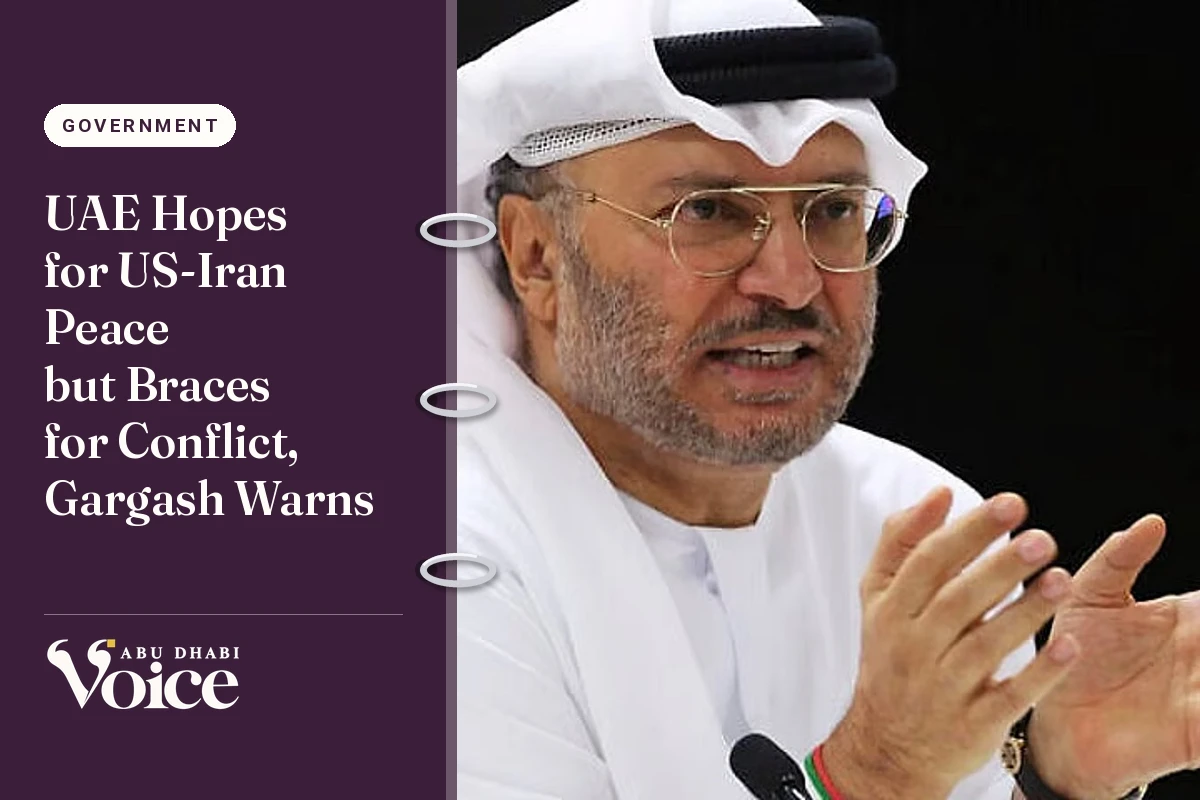
Anwar Gargash, diplomatic adviser to the UAE President, told an international security forum in Bahrain that another round of conflict would damage regional interests, and that the Gulf state remained realistic about the risks.
“We’re hoping that there is a diplomatic breakthrough,” Gargash said at the 22nd IISS Manama Dialogue, according to AFP. “It is not the interest of the region to go through another round… But I think we’re also, as we’ve shown before, braced for the worst.”
UAE Stands Ready for Either Outcome
Gargash’s remarks came amid heightened tensions between Washington and Tehran, and growing fears that a new round of fighting could destabilise the Middle East further. The UAE has consistently called for restraint, dialogue and adherence to international law as the path to resolving regional crises peacefully.
In a statement last week, the Ministry of Foreign Affairs reiterated the country’s commitment to diplomatic solutions and urged intensified regional and international efforts to avert escalation.
GCC Reiterates Openness to Talks
Speaking at the same summit, Gulf Cooperation Council Secretary-General Jasem Mohamed Al Budaiwi said Gulf states remained ready to negotiate with Tehran, but stressed that diplomacy required a reciprocal approach.
“The GCC states have always called for dialogue and negotiation to resolve any issue in the region, and they still do,” Al Budaiwi said. “But diplomacy needs partners, partners who respond in kind.”
He confirmed that the six-member bloc maintained communication channels with Iran while cooperating with international partners to safeguard regional security. Al Budaiwi also noted that GCC countries had neither initiated nor sought the conflict, but had suffered casualties and damage to civilian and critical infrastructure during Iranian attacks.
Navigation Security Requires Joint Action
Saudi Vice Foreign Minister Waleed Elkhereiji warned that threats to international navigation through the Strait of Hormuz, the Red Sea and Bab el-Mandeb demanded coordinated international action.
“Securing navigation in the Red Sea and the Straits of Bab el Mandeb and Hormuz is a shared responsibility that requires regional and international cooperation based on the respect of international law,” he said.
Elkhereiji also condemned renewed Houthi attacks on Saudi Arabia and threats to commercial shipping, accusing the Yemeni militia of undermining diplomatic efforts to resolve the conflict.
The GCC chief called for navigation through the Strait of Hormuz to return to conditions prevailing before 28 February, when the US-Iran war began. The strait is a vital route for global energy shipments, while Bab el-Mandeb connects the Red Sea with the Gulf of Aden and international shipping lanes.
The warnings at the Bahrain summit underscored the delicate balance Gulf governments must strike as they pursue diplomacy with Tehran while preparing for the security and economic fallout of any renewed conflict.
The 22nd IISS Manama Dialogue, an annual international security summit, is being held from 30 October to 1 November at The Ritz-Carlton in Bahrain. It brings together political leaders, foreign ministers, defence officials and security experts from more than 50 countries, with over 40 senior ministers and military chiefs expected to attend.