Ras Al Khaimah inks MoU with Chinese firm to develop AI-powered transport systems
The Ras Al Khaimah Transport Authority (RAKTA) has signed a memorandum of understanding with a Chinese transport planning specialist to explore artificial intelligence, autonomous mobility and low-altitude transport technologies. The partnership aims to develop smarter and more integrated transport systems tailored to the northern emirate.
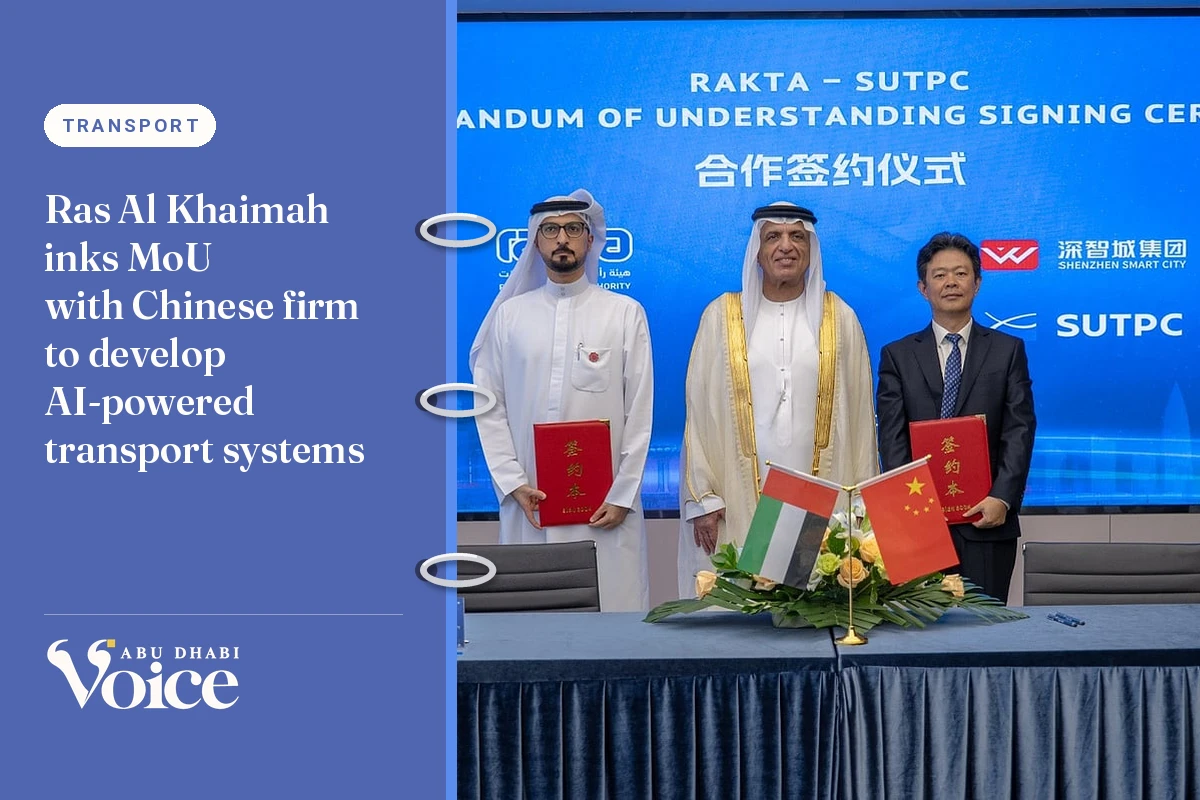
Strategic Partnership Signed
The agreement was formalised between RAKTA and Shenzhen Urban Transport Planning Center Co. Ltd. (SUTPC). Eng. Esmaeel Hasan Al Blooshi, Director General of RAKTA, and Li Muping, General Manager of SUTPC, signed the document. The ceremony was witnessed by His Highness Sheikh Saud bin Saqr Al Qasimi, UAE Supreme Council Member and Ruler of Ras Al Khaimah.
Under the MoU, the two organisations will work together on pilot projects and innovative mobility solutions designed for the emirate’s specific transport needs. The partnership covers intelligent transportation, public transport, autonomous mobility and AI-powered applications, while also examining opportunities in the emerging low-altitude economy. This sector includes commercial, industrial and public service activities in airspace close to the ground, potentially involving unmanned aerial vehicles (UAVs).
Scope of Collaboration
The agreement provides a framework for developing pilot trials for smart mobility solutions and low-altitude technologies. It also includes specialised training programmes, knowledge exchange and assessments of technologies that could be introduced in Ras Al Khaimah in line with the emirate’s development priorities.
This partnership builds on the strategic relationship between Ras Al Khaimah and China’s Guangdong Province, which was formalised through an MoU signed in November 2024. It also strengthens ongoing cooperation with Shenzhen in smart mobility, public transport and the low-altitude economy.
During discussions, SUTPC presented its integrated smart transportation solutions powered by TransPaaS, its next-generation intelligent transportation operating system. The platform supports applications such as autonomous-driving management, regulation of low-altitude UAVs, coordination between transport and energy systems, and the use of large-scale AI models. The platform-based approach is designed to turn data insights into practical operational solutions for specific transport scenarios.
Technology and Pilot Projects
Building on the presentation, RAKTA and SUTPC will assess how relevant technologies could be adapted to Ras Al Khaimah’s urban development plans and transport requirements. Potential areas of cooperation include transport operations command and control, digital twins, public transport optimisation, low-altitude mobility planning and the integration of autonomous transport services. Digital twins, which create virtual representations of physical assets and systems, can help transport planners monitor operations, analyse performance and assess potential improvements.
A key objective of the partnership is to explore an integrated smart transportation system that connects conventional ground transport with low-altitude mobility. The proposed approach would allow both sides to examine how emerging technologies could complement existing transport networks, improve operational coordination and support the emirate’s longer-term mobility ambitions. The agreement provides a framework for exploring these opportunities, with the selection and development of potential projects to be informed by local transport needs and further technical assessments.
Next Steps
As the next step, SUTPC will conduct site visits and needs assessments in Ras Al Khaimah, prepare a diagnostic report and work with RAKTA to translate the cooperation framework into specific projects. The assessment is expected to help identify relevant technologies and potential applications suited to the emirate’s urban environment and transport priorities.
The partnership reflects RAKTA’s continued efforts to explore innovative transport solutions, strengthen international cooperation and support the development of a more integrated, digitalised and intelligent transport system in Ras Al Khaimah.