UAE strengthens road flood defences with 17 pumping stations and 800 culverts ahead of rainy season
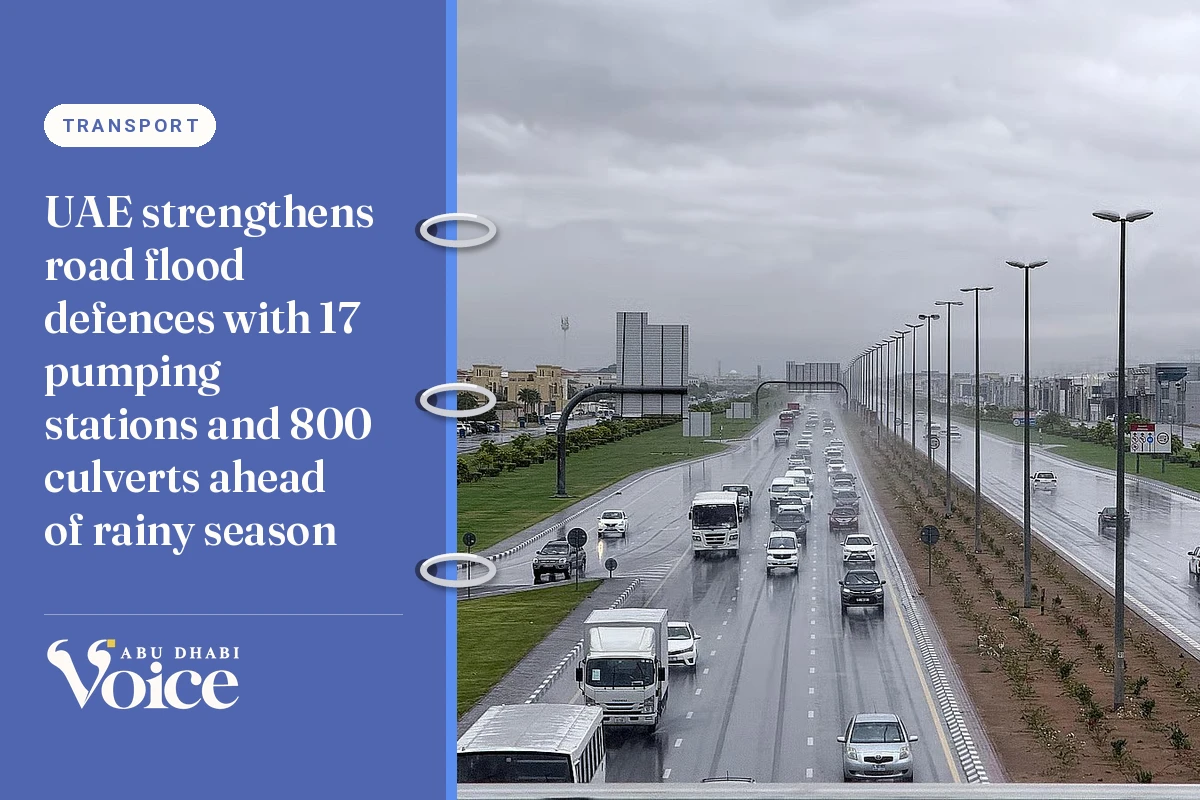
The Ministry of Energy and Infrastructure has stepped up its preparations for the rainy season by reinforcing drainage systems on federal roads, including the inspection and maintenance of 17 pumping stations and 800 stormwater culverts. The measures are designed to keep traffic flowing smoothly and ensure the safety of road users during wet weather.
Preventive maintenance and field readiness
As part of its proactive approach, the Ministry is inspecting and servicing stormwater drainage networks, clearing waterways where wadis intersect with federal roads, and verifying the operational readiness of the pumping stations and culverts. Specialised field teams are being deployed with the necessary equipment and machinery to tackle water accumulation and other weather-related issues, enabling faster response times and uninterrupted traffic flow.
Preventive inspections also cover the structural condition of drainage infrastructure, sediment removal, and the functioning of discharge gates, waterways, and monitoring systems. These steps strengthen the capacity of the infrastructure to handle rainwater flows and reduce the risk of flash floods and flooding.
Smart monitoring and early warning
A smart, round-the-clock monitoring system for dams and wadis is in operation, equipped with surveillance cameras and sensors that measure water levels and flow rates. The system includes an early flood warning mechanism linked to the control centre and relevant national authorities, helping to anticipate risks, issue alerts, and support proactive measures to protect lives and property.
The Ministry also continues to coordinate with federal and local partners to strengthen joint preparedness, review emergency plans, and improve field response procedures. This collaboration ensures rapid information exchange, clear division of responsibilities, and effective management of various rainfall scenarios while minimising impact on people, property, and infrastructure.
Real-time oversight and response
Through its control centre, the Ministry continuously monitors the federal road network, providing real-time oversight of road conditions and field developments. The centre supports timely decision-making and the deployment of emergency and maintenance teams to affected locations in coordination with relevant authorities. This enables a swift response to rainwater accumulation, reduces traffic disruptions, and enhances road user safety and service continuity.
Eng. Mohammed Al Mansoori, Undersecretary for Infrastructure and Transport Affairs at the Ministry of Energy and Infrastructure, said that protecting lives and property and ensuring the continuity of essential services are key priorities in the Ministry’s plans. He noted that preparations for the rainy season begin well in advance, with assessments of federal roads, dams, and water infrastructure, identification of priority locations, and enhanced field team capabilities to respond effectively to various weather conditions.
“We follow a proactive approach focused on enhancing infrastructure readiness and strengthening its resilience to changing weather conditions, with particular emphasis on rapid response and minimising the impact of rainfall on traffic flow,” Al Mansoori said. “We are committed to developing an integrated operational system that combines preventive maintenance, continuous monitoring, and coordinated field response to ensure road user safety and service continuity.”
He added, “Our investments in infrastructure development go beyond improving operational efficiency. They also focus on strengthening resilience and adaptability to different climatic conditions, ensuring that our infrastructure meets future development needs while maintaining the quality of services provided to the community.”